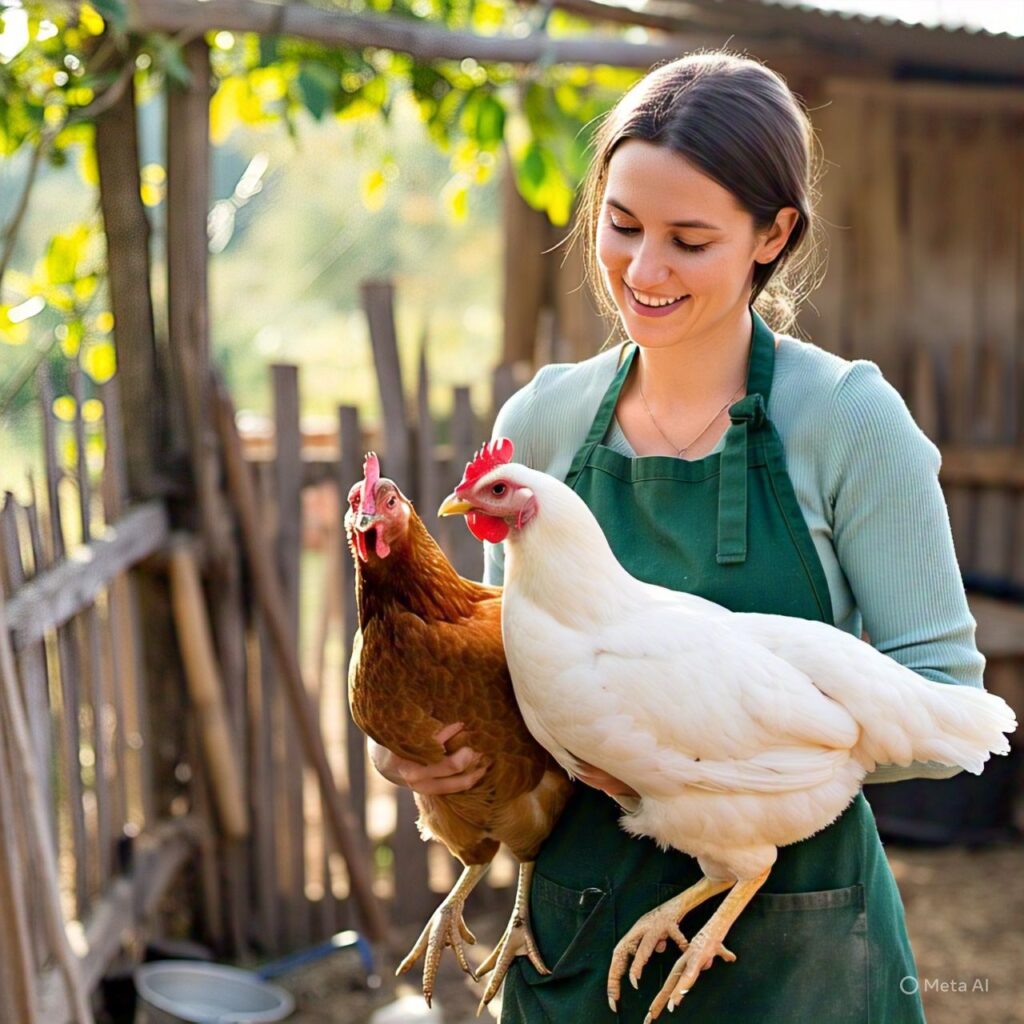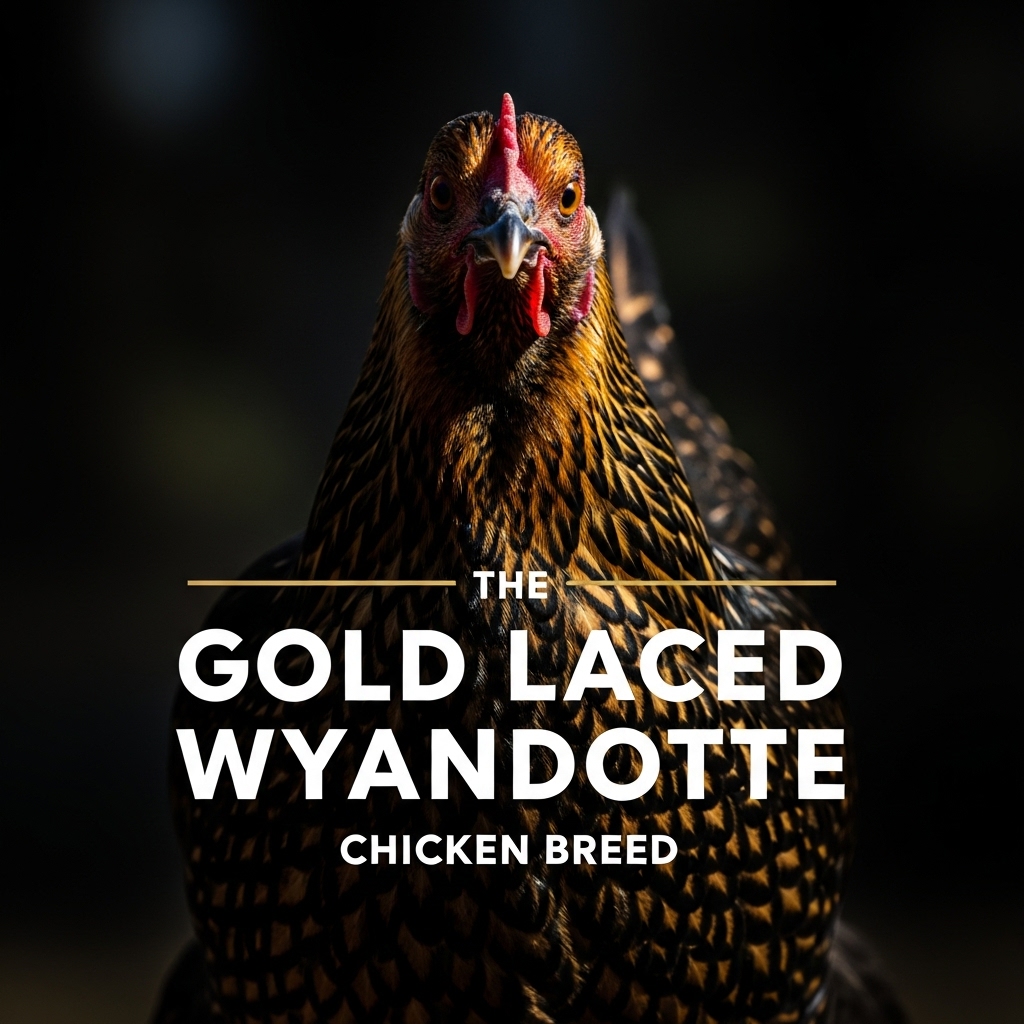
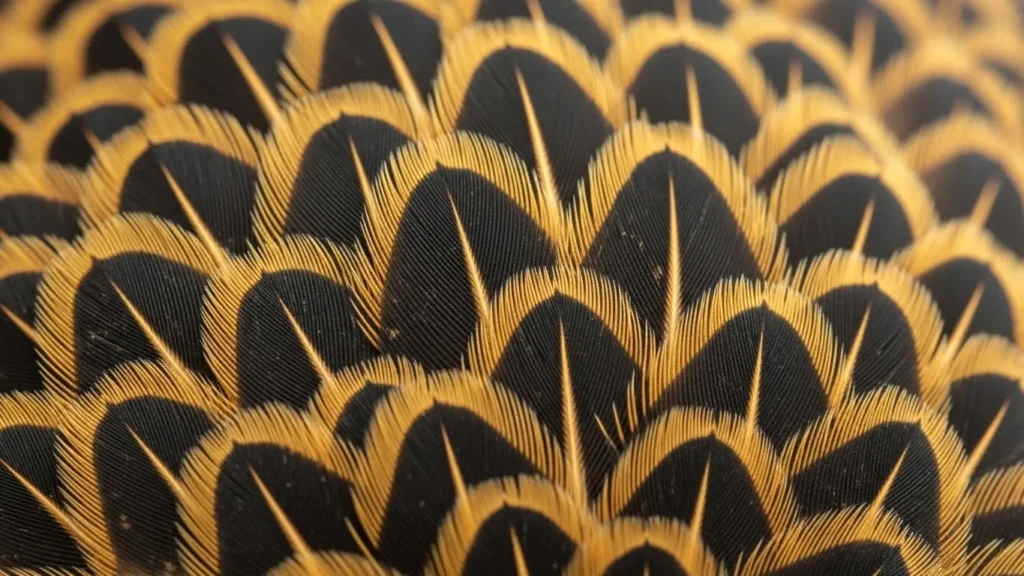
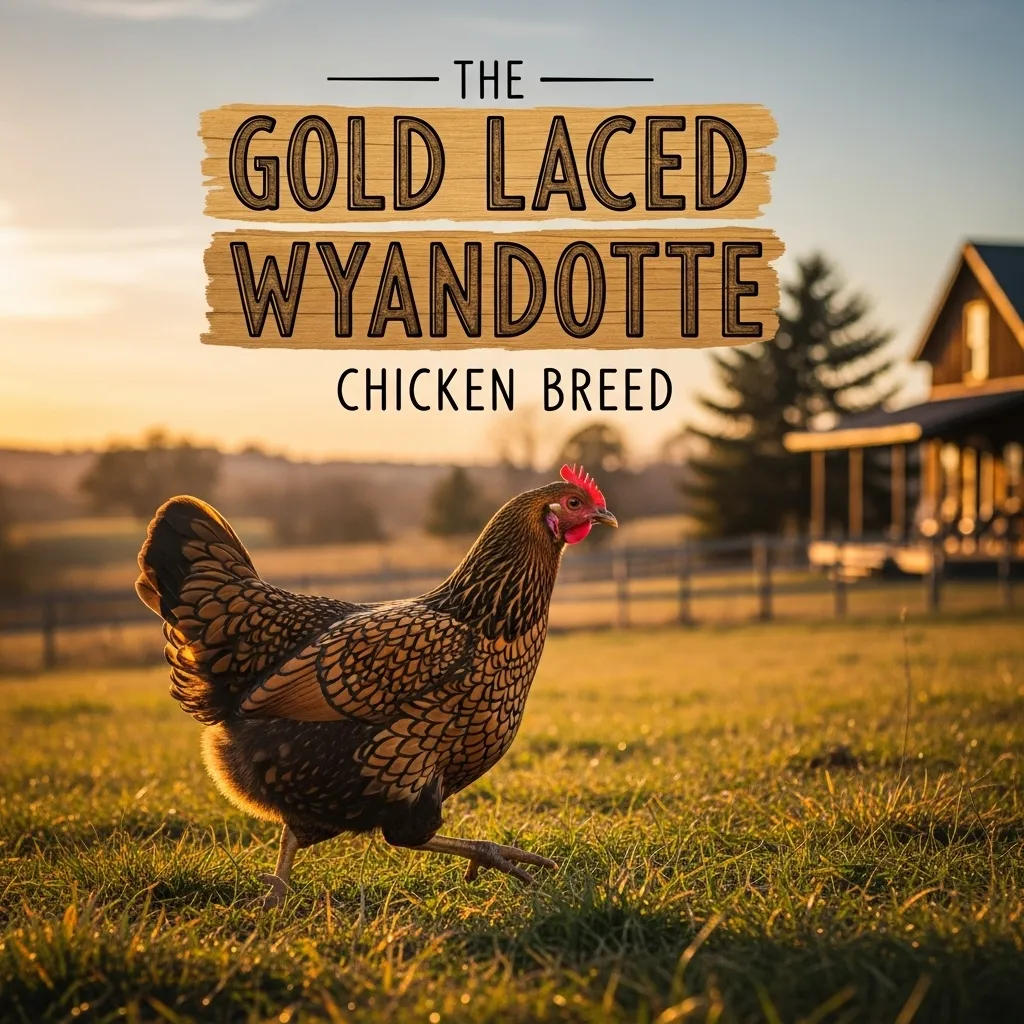
Golden feathers edged in beetle-black lacing. Every feather looks hand-painted.
That’s a Gold Laced Wyandotte.
They’re stunning birds. You see the beauty, but they’re reliable layers producing 200-240 brown eggs yearly, cold-hardy enough for harsh winters, and calm enough for beginner keepers.
I’ve kept Wyandottes (Gold and Blue Wyandotte) for years. They’re the birds that look like they belong in a show, but they’re practical enough for everyday backyard flocks.
Why Do They Stand Out?
Dual-purpose heritage breed: Eggs and meat, not just beauty
Cold-hardy: Developed in New York, rose comb prevents frostbite, lay through winter
Beginner-friendly: Calm temperament, forgiving of mistakes, hardy constitution
Stunning appearance: Golden feathers with black lacing create sequined effect
Productive: 4-5 eggs weekly plus decent meat yields
What You’ll Learn Now?
Complete care from housing through health. Space needs, feeding requirements, temperament expectations, and what makes them tick.
Realistic production numbers—actual egg counts from multiple sources and keeper surveys, not inflated marketing.
Temperament truth. They’re beautiful but aloof. Not lap chickens. I’ll explain what that actually means day-to-day.
Suitability assessment. These birds work great for some situations, poorly for others. I’ll help you decide if they’re right for you.
By the end, you’ll know exactly what keeping Gold Laced Wyandottes involves. No surprises.
Breed Overview & History
Understanding Gold Laced Wyandotte origins helps you know what to expect.
Wyandotte Origins
Four people created the Wyandotte breed in the 1870s: H.M. Doubleday, John Ray, L. Whittaker, and Fred Houdlette.
They crossed Dark Brahmas with Silver Spangled Hamburgs for a dual-purpose bird with striking looks and cold tolerance.
The Silver Laced Wyandotte was admitted to the American Poultry Association Standard of Perfection in 1883.
Wikipedia notes the breed was named after the indigenous Wyandot people as an honor.
Development of Gold Laced
This variety came second, developed in Wisconsin in the 1880s by Joseph McKeen.
Originally called “Winnebagoes” after McKeen’s farm, they were standardized as Gold Laced Wyandottes in 1888.
As factory farming thrived in the mid-1900s, heritage breeds declined. Wyandottes nearly disappeared.
The breed was listed as endangered by the American Livestock Conservancy.
Why Are They Special Today?
Beauty + function: Stunning plumage with 200-240 eggs yearly
Beginner-suitable: Calm, hardy, forgiving of mistakes
Cold-hardy: Rose comb and dense feathering prevent frostbite
Heritage conservation: Part of American poultry history
Physical Characteristics
They are instantly recognizable once you know what to look for.
Size & Weight
Hens: 6-6.5 pounds
Roosters: 8-8.5 pounds
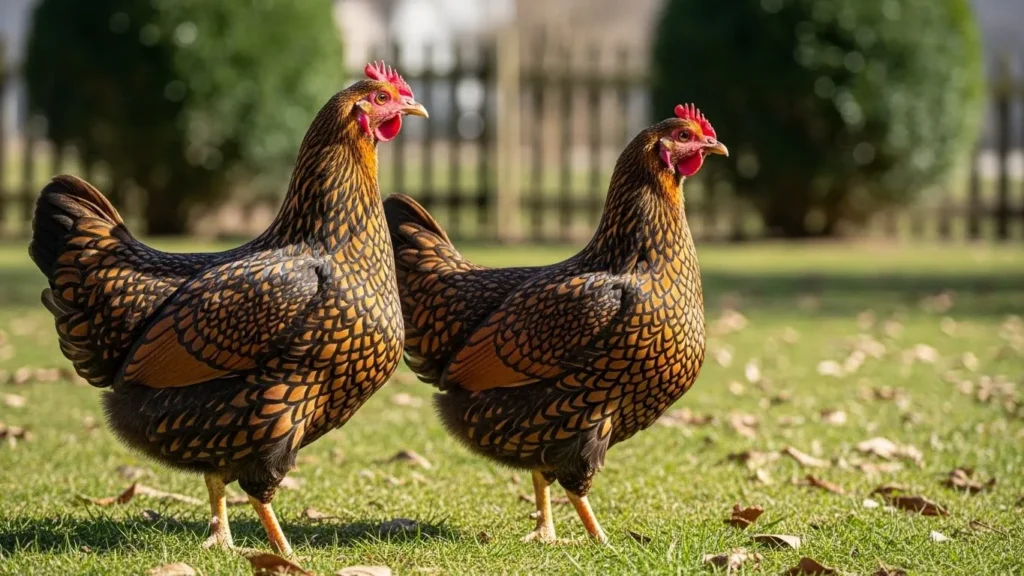
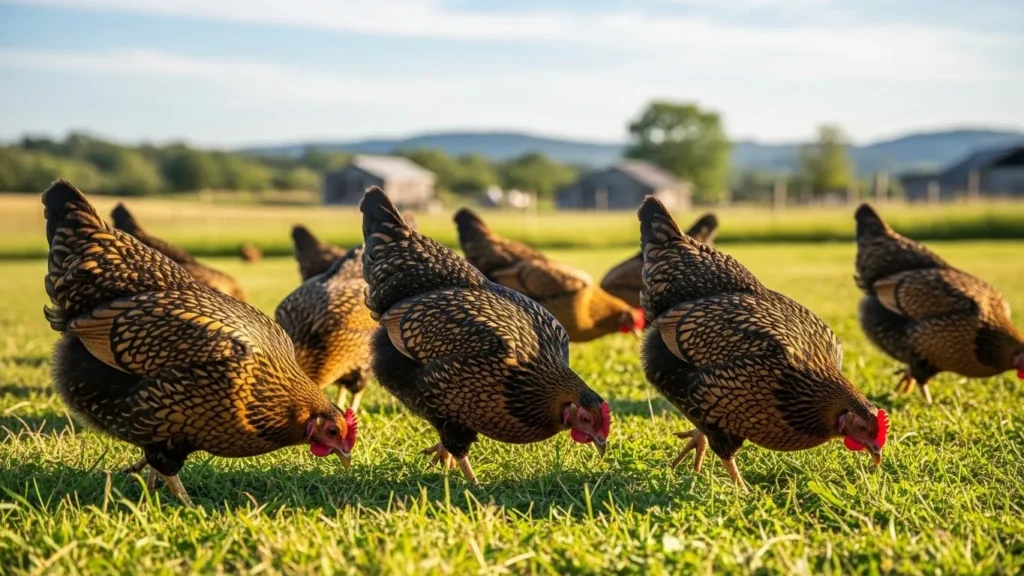
Appearance: Look larger due to thick, fluffy feathering
Stunning Feather Pattern
Base color: Deep golden brown to rich gold
Lacing: Beetle-black outline around each feather edge
Overall effect: Creates a sequined or spangled appearance
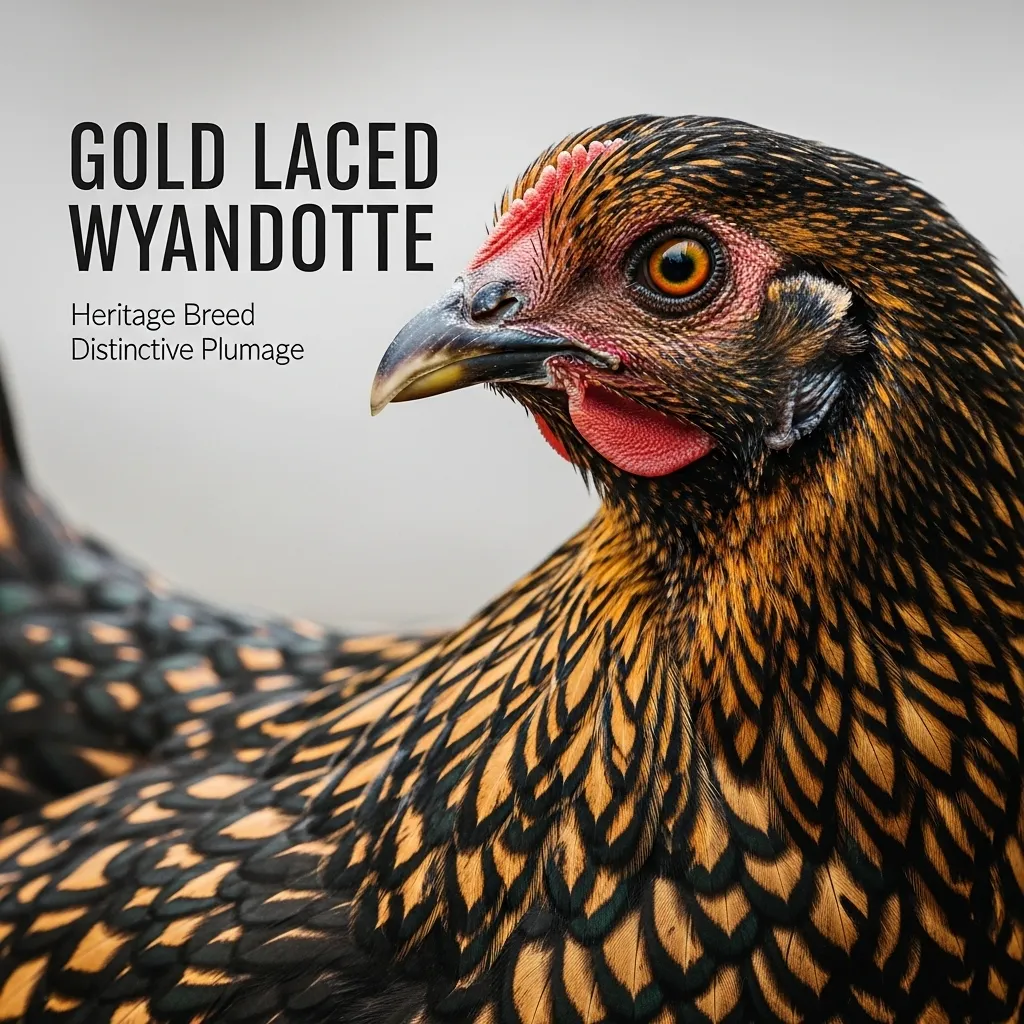
Breast, wings, and saddle areas have gold feathers edged in black, with lacing showing very well on hens.
Body Shape
Classic Wyandotte conformation:
- Broad, deep body forming U-shape
- Full, well-rounded breast
- Short, sturdy yellow legs
- Wide, curved back
- Dense, smooth feathering with under-fluff
Head Features
Rose comb: Flat, broad, sits close to head (key for cold tolerance)
Color: Bright red comb, wattles, face, earlobes
Eyes: Bay red to reddish-bay
Beak: Yellow to horn-colored
Roosters vs Hens
Roosters:
- 8-8.5 pounds
- Golden or chestnut head and neck
- Less defined lacing on breast and wings
- Shine on shoulder feathers
- Pointed saddle feathers, no tail lacing
Hens:
- 6-6.5 pounds
- More golden head and neck than black
- Crisp, defined black lacing throughout
- Rounded feathers uniformly
Overall Appearance
Dense, fluffy feathering: Loose but not Cochin-like
Balanced build: Well-proportioned, sturdy
Short yellow legs: Support weight easily, no feathering
Impressive presence: Round, full shape creates striking silhouette
According to Backyard Chicken Coops, they’re fairly large with round, broad body shapes and fully feathered with deep breasts.
Egg Production
Gold Laced Wyandottes are reliable layers. Here’s what to expect.
Production Numbers
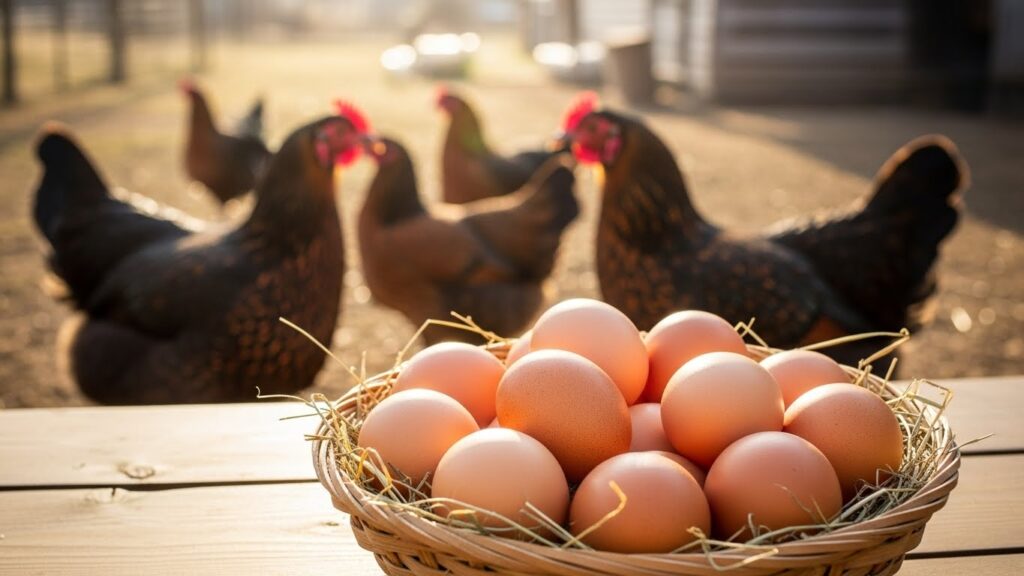
Annual: 180-260 eggs per year depending on line (most sources cite 200-240)
Weekly: 3-5 eggs during peak production
Egg size: Medium to large
Egg color: Light brown to cream
Catch a Torii Farms reports 180-260 eggs annually. Manna Pro estimates 200-250 eggs.
Laying Timeline
Start laying: 18-22 weeks (4-6 months old)
Peak production: Years 1-3
Gradual decline: Production decreases during years 3-5
Longevity: Can lay 5-6 years at reduced rates
Excellent Winter Layers
Why they excel in cold: Rose comb prevents frostbite, dense feathering provides insulation
Winter management: Some keepers add supplemental lighting to maintain production, though many prefer letting hens rest naturally.
Broodiness Tendency
Frequency: Moderate to high tendency
Maternal behavior: Excellent mothers—attentive, protective, will hatch 8-12 eggs
Impact on production: Broody hens stop laying until finished raising chicks or broken from broodiness
Egg Quality
Shell strength: Good with proper calcium supplementation
Consistency: Large, brown eggs with hard shells and great shelf life according to Manna Pro
Feed requirements: 16-18% protein layer feed for optimal production
Realistic Expectations
Not maximum producers: Production hybrids lay 280-320 eggs. Wyandottes won’t match that.
Dual-purpose trade-off: Heirloom Grown says they’re very good for a heritage breed chicken—focus was on both eggs and meat, not maximum laying.
Value proposition: 200+ eggs yearly for 5-6 years beats short-lived high producers for long-term flocks.
Housing Requirements
Gold Laced Wyandottes need adequate space and proper shelter.
Space Requirements
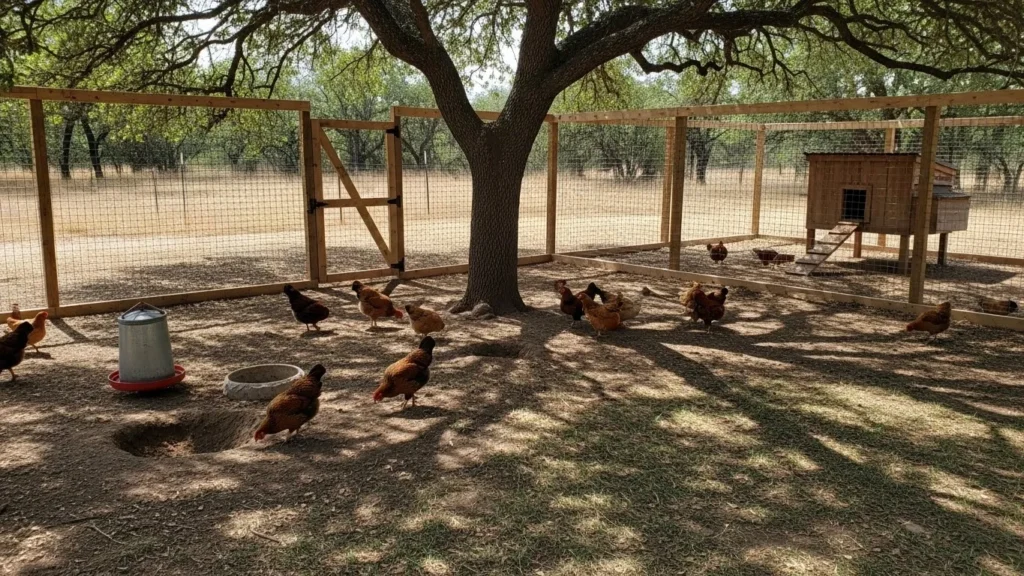
Coop space: 4 sq ft per bird minimum
Run space: 10 sq ft per bird minimum
Free-range: Thrive with access to larger areas
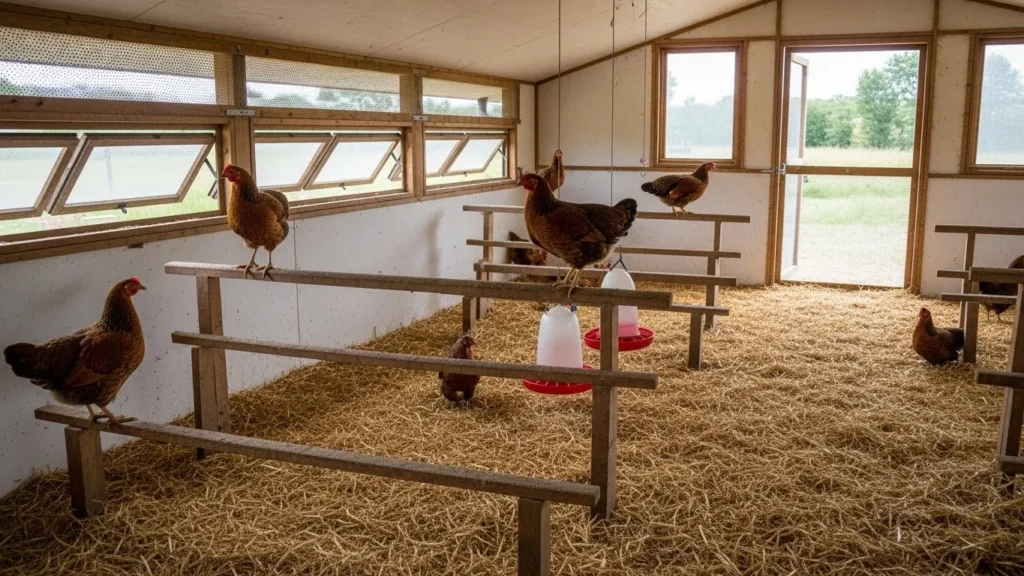
Roosting Requirements
Roost space: 8-10 inches per bird
Roost height: 2-3 feet off ground
Roost material: 2×4 lumber, wide side up for stability
Design: Sturdy and smooth surface to prevent bumblefoot
Nesting Boxes
Size: 12×12 inches minimum to accommodate their size
Quantity: One box per 3-4 hens
Placement: Quiet, darker areas encourage laying
Coop Design Essentials
Ventilation: Critical for health—prevents respiratory issues and moisture buildup
Predator protection: Hardware cloth, secure latches, buried wire around perimeter
Dry environment: Keeps fluffy feathering clean and prevents parasites
Spacious design: Large-bodied birds need room to move comfortably
Climate Adaptability
Cold tolerance: Excellent—rose comb resists frostbite, dense feathering insulates
Heat tolerance: Moderate—need shade, ventilation, fresh water in summer
Feathered Farm Life recommends maintaining coop temperature between 40°F and 70°F (4°C-21°C) for optimal health.
Confinement vs Free-Range
Handle confinement well: Won’t stress in coops as long as they have regular exercise access
Prefer free-range: Chickens and More recommends free-ranging if possible—they’re good foragers who enjoy roaming
Low flight risk: Can fly but don’t tend to, so easy to manage without tall fencing
Space-Related Issues
Insufficient space causes: Feather picking, boredom behaviors, aggression, stress, reduced production
Prevention: Always build bigger than minimum requirements, provide enrichment like foraging toys and dust bath areas
Feeding & Nutrition
Proper nutrition keeps Gold Laced Wyandottes healthy and productive.
Basic Feed Requirements
Chicks (0-8 weeks): 18-20% protein starter feed
Juveniles (8-20 weeks): 16% protein grower feed
Laying hens (20+ weeks): 16-18% protein layer feed
Daily Feed Amount
Average consumption: 1/4 to 1/3 pound per adult bird daily
Large breed factor: They eat more than smaller breeds due to 6-8.5 pound body weight
Essential Supplementation
Oyster shell: Free-choice calcium in separate container (not mixed in feed) for strong eggshells
Grit: Necessary for digestion, especially for foraging birds
Fresh water: Constantly available, change daily
Foraging Benefits
Excellent foragers: Love free-ranging, actively hunt insects for protein supplementation
Feed savings: Backyard Chicken Coops notes they can reduce commercial feed dependence by foraging
Natural protein: A-Z Animals confirms they love to forage and can supplement protein needs with insects they hunt down
Treats & Feeding Guidelines
Kitchen scraps: Vegetables, fruits, leafy greens (maximum 10% of total diet)
Protein treats: Mealworms, sunflower seeds occasionally
What to avoid: Avocado, chocolate, raw beans, moldy food
Farm Backyard recommends treats not exceed 10% of daily diet to maintain balanced nutrition.
Weight Management
Important for large breeds: Their rounded frames store weight easily
Risk: Overfeeding causes obesity, joint problems, reduced mobility
Prevention: Balanced diet, avoid excessive treats, encourage free-range exercise
Feed Quality
Choose quality brands: High-quality layer feed ensures proper nutrition
Protein content: Match life stage requirements (18-20% chicks, 16-18% layers)
Avoid cheap feeds: Poor quality leads to health issues and reduced production
Health & Common Issues
Gold Laced Wyandottes are generally hardy birds with few breed-specific problems.
General Health
Hardy breed: The Happy Chicken Coop confirms they’re strong, healthy birds not prone to health issues beyond standard parasites.
Life expectancy: 6-8 years average, some reach 10-12 years
Common Health Concerns
Same as all chickens:
- External parasites (mites, lice)
- Internal parasites (worms)
- Respiratory infections
- Bumblefoot
Dense feathering consideration: Chicken Experts says they’re slightly more prone to skin and feather parasites than less fluffy breeds due to dense plumage.
No breed-specific diseases: Standard chicken care prevents most problems.
Feather-Related Issues
Fluffy rear end: Backyard Chicken Coops notes their feathery, fluffy behind can cause mess from droppings—quick trim fixes it.
Lice vulnerability: The Happy Chicken Coop warns dense feathering makes lice problems more common—keep close eye and treat as necessary.
Summer heat stress: Dense feathering works against them in hot weather. Need shade and cool water to avoid heatstroke.
Preventive Care
Weekly: Observe behavior, check for parasites in dense feathers
Monthly: Handle birds, examine feet, assess weight
Quarterly: Worm treatment if needed, deep coop clean
Dust baths: Essential for parasite control with heavy feathering
Cold Weather Health
Rose comb advantage: Less frostbite than single combs
Monitor: Apply petroleum jelly during extreme cold
Keep dry: Moisture plus cold causes respiratory issues
Signs of Illness
Watch for: Lethargy, discharge, labored breathing, appetite loss, decreased laying, ruffled feathers
Action: Isolate sick birds immediately, consult vet if symptoms persist
Quarantine Protocol
30 days isolation for new birds prevents disease spread to established flock
Long-Term Health
Heritage genetics provide stronger immune systems than production hybrids. With proper care, they live longer, healthier lives than birds bred purely for maximum output.