Splash Marans Chickens! Have you ever seen a chicken that looks like someone flicked paint on it?
That’s exactly what comes to mind when chicken folks see these beauties. You’re probably here because regular chickens seem a bit boring, am I right?
Looking for birds that lay dark brown eggs AND look stunning in your yard? A variety of Marans “Splash” are like the artists of the chicken world – they’ve got these cool splattered patterns all over their feathers.
These chickens are pretty chill and easy to handle, plus they give you those amazing dark eggs everyone talks about. They’re the perfect combo of practical and pretty.
Want to know if these spotted superstars are right for your flock? Stick around – I’m going to tell you everything you need to know about keeping these fantastic birds!
Here is what we will discuss.
What is the History of Splash Marans?
How to understand the Blue, Black, and Splash Color Genetics?
What are the differences between Blue, Black, and Splash Marans?
How to breed Blue, Black, and Splash Marans?
What are the Temperament and Personality Traits of Splash Marans?
Are Splash Marans a rare breed?
Are Splash Marans Broody?
Are Splash Marans Hardy?
What are the egg Production: Quantity, Size, and Shell Color of Splash Maran?
What are the Care and Living Requirements of Splash Maran?
What are the Feeding and Nutrition Needs?
How to raise BBS Marans with Other Breeds?
What are the common health issues in Splash Marans?
Are Splash Marans Right for Your Backyard Flock?
What is the History of Splash Marans?
This breed is basically a color variety of the Marans chicken breed, which comes from crossing local French chickens with imported game birds and possibly Croad Langshans from England. These crosses produced hardy birds known for their dark brown eggs.
The “Splash” variety of chickens is essentially bred from Blue Marans chickens. When two Blue Marans are bred to each other, their offspring can be Blue, Black, or Splash.
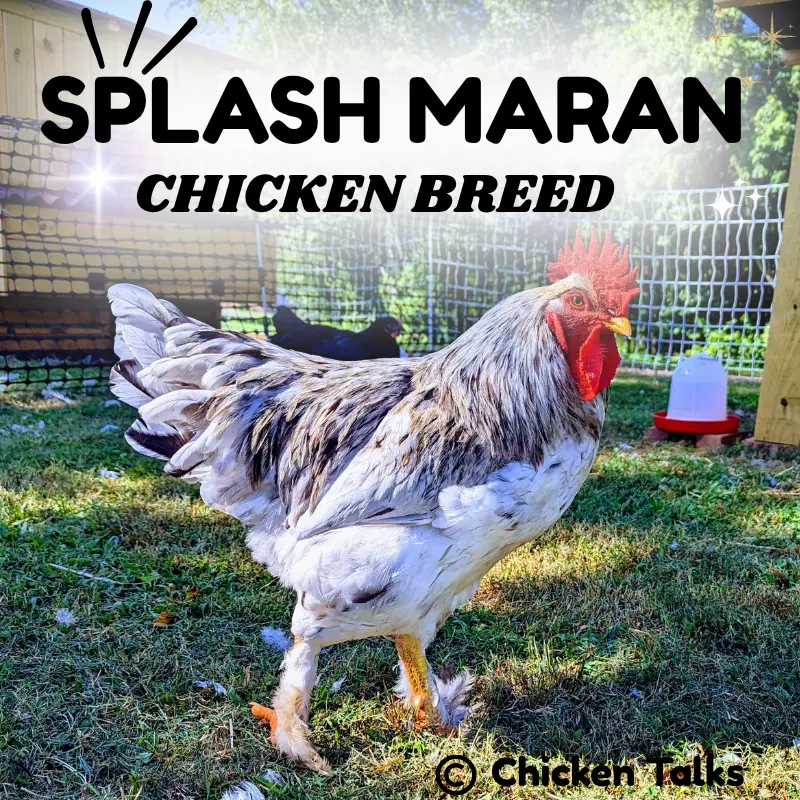
These Marans have a pale, silvery-white base color with blue or grey splashes on their feathers. This color is not officially recognized by all poultry associations, like APA, but is popular among backyard breeders.
How to understand the Blue, Black, and Splash Color Genetics?
BBS means Blue, Black, and Splash – three stunning color variations found in many chicken breeds. From my years raising them, I’ve learned this genetic trio creates the most beautiful flocks.
Breeding this breed is straightforward once you understand the genetics. When I breed two blue birds together, I get all three colors in their offspring – it’s like unwrapping presents!
The magic happens through simple inheritance patterns. You’ll see 25% black chicks, 50% blue, and 25% splash. This predictable ratio makes planning your flock colors easy and exciting for any breeder.
What are the differences between Blue, Black, and Splash Marans?
Blue Marans have that good-looking slate-blue color with darker lacing. Black Marans are deep, solid black with a green sheen. I see these two are quite common in most flocks.
Splash Marans are the showstoppers – white base with irregular dark spots scattered across their feathers.
All three varieties of Marans lay the same dark chocolate eggs and have identical temperaments. The only real difference is their stunning plumage patterns, each bringing unique beauty to your backyard flock.
How to breed Blue, Black, and Splash Marans?
Getting into breeding these colorful chickens was confusing at first. I thought pairing two blue chickens would give me all blue chicks – boy, was I wrong! Understanding the genetics behind each cross changed everything for me.
Blue Cross Blue:
By breeding blue with blue, you might get half of the ratio (50%) of blue, one-fourth (25%) of black, and the same ratio (25%) of splash chicks. Each time I hatch eggs, it’s like opening a surprise box of colors.
Blue x Black Cross:
Pairing blue with black is way more straightforward than other combinations. By pairing these combinations, you will get half of the ratio (50%) of black and half of the ratio (50%) of blue chicks.
This setup works excellently for boosting your blue gene pool while also getting strong blackbirds.
Blue x Splash Cross:
Crossing blue chickens with splash results in similar outcomes – half blue, half splash. This combination is great for breeders who want to try out different chicken colors.
Every hatch remains exciting and diverse.
Black x Black Cross:
Wherever you go to breed black with black chicken, you will get a ratio of 100% black chicks.
Splash x Splash Cross:
This type of breeding is interesting for breeders who want to experience and discover new chicken varieties and color combinations.
Splash x Black Cross:
When you go to breed this type, you will only get one colour output, which is blue. Only blue chicks originate when you go to this type of breed.
What are the Temperament and Personality Traits of Splash Marans?
They normally chill birds. Their docile nature makes handling easy for health checks and coop maintenance. They are also excellent foragers, quietly exploring the yard while maintaining their peaceful, laid-back personality that chicken keepers love.
My kids can pick them up without getting pecked, which is nice.
They get along fine with other chickens and don’t really start fights. Mostly, they just wander around looking for bugs and stuff. Easy birds to have around, honestly.
Are Splash Marans a rare breed?
Yes, they are rare in the world. This type of Marans is not officially listed on any platform, while only black copper Marans are officially recognized in the world or listed by the American Poultry Association (APA).
Are Splash Marans Broody?
They do not have broodiness behavior like other Marans varieties (such as Black Copper, Blue, or Cuckoo Marans), especially when compared to other breeds like Silkies, Orpingtons, or Cochins.
However, broodiness can vary between them, and some of the hens may go broody sometimes, when:
- They’re allowed to accumulate eggs in the nest.
- It’s spring or early summer (prime broody season).
- They feel particularly safe and undisturbed in their environment.
Are Splash Marans Hardy?
I’ve had my chickens go through some heavy winters and hot summers without much trouble. They don’t seem to get sick as much as some of my other chickens do. When the weather gets nasty, they just deal with it.
My chickens have been through ice storms, heat waves, and everything in between. They keep laying eggs and acting normal when other breeds start looking miserable. I don’t baby them like I used to with my first chickens.
They’re not delicate at all, which surprised me since they look so fancy. Good choice if you want pretty birds that can handle whatever the weather throws at them.
What are the egg Production: Quantity, Size, and Shell Color of Splash Maran?
These docile-natured birds lay about 3-4 eggs per week, which is a good ratio. The sizes are medium to large and definitely bigger than what you get from smaller breeds.
The shell color is where these chickens shine. Those dark brown eggs are amazing – way darker than regular brown eggs from the store. Some of mine lay eggs so dark they almost look chocolate.
During winter, they slow down like most chickens, but in spring and summer, they’re pretty consistent layers. The egg quality is great too – thick shells and bright orange yolks that make breakfast look fancy.
What are the Care and Living Requirements of Splash Maran?
They don’t need anything fancy – just basic chicken stuff. I give mine about 4 square feet per bird in the coop, and they seem happy. They’re not picky about housing like some breeds.
These birds love to scratch around outside, so free-ranging works great if you can do it. Mine spend most of the day hunting bugs and eating grass when the weather’s nice.
Regular chicken feed works fine, plus they eat whatever scraps I throw out there. They handle cold pretty well, but need shade in summer. Nothing too complicated – just normal chicken care.
What are the Feeding and Nutrition Needs?
Regular layer feed does the job fine. I use the 16% protein stuff from the feed store, and they lay well on it. Nothing special is needed.
These birds are good foragers, so they find plenty of bugs and greens on their own. I toss them kitchen scraps sometimes – they go crazy for leftover pasta and vegetables.
During the molting season, I switch to higher protein feed to help with feather growth. Fresh water every day is a must, especially in hot weather when they drink way more than usual.
How to raise BBS Marans with Other Breeds?
They get along great with other chickens. I’ve got them mixed with Rhode Island Reds and Buff Orpingtons – no real problems between them at all.
They’re not bullies, and they don’t get picked on much either. The calm personality helps when introducing new birds to the flock. Takes a few days, but they usually sort things out peacefully.
Size-wise, they match up well with most standard breeds, so nobody gets trampled during feeding time. I’ve never had serious fights or injuries when mixing my BBS Marans with other types.
What are the common health issues in Splash Marans?
They are commonly hardy chickens. I haven’t seen any major health problems with my chickens – just the usual chicken stuff like mites or worms that any breed can get.
Some of the respiratory issues occur during humid weather since they can be a bit sensitive to moisture. Good ventilation in the coop helps prevent most breathing problems I’ve seen.
Their feet can get bumblefoot if the coop stays wet and dirty. Keep things clean and dry, and check their feet once in a while. Regular deworming and basic care keep them healthy and laying well.
Are Splash Marans Right for Your Backyard Flock?
If you want pretty chickens that lay dark eggs and don’t cause trouble, Splash Marans might work for you. They’re good for beginners since they’re not high-maintenance or aggressive birds.
Think about space, though – they like to roam around and aren’t great in tiny coops. If you’ve got room and want something different from regular brown chickens, these are worth considering.
They cost more than common breeds and lay fewer eggs than production hens. But if you want unique birds that look cool and taste good, these could be perfect for your setup.