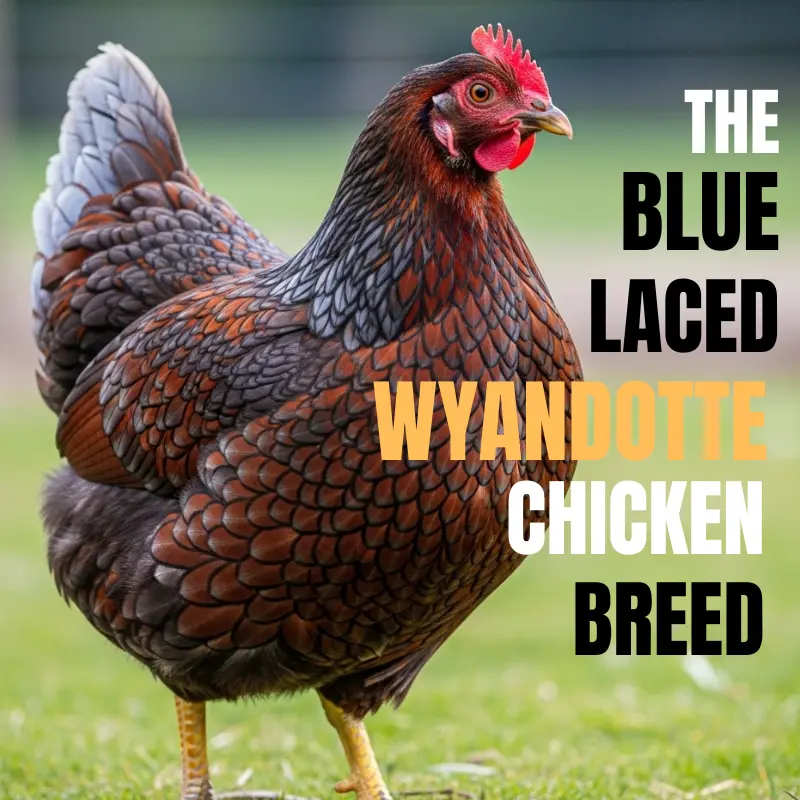
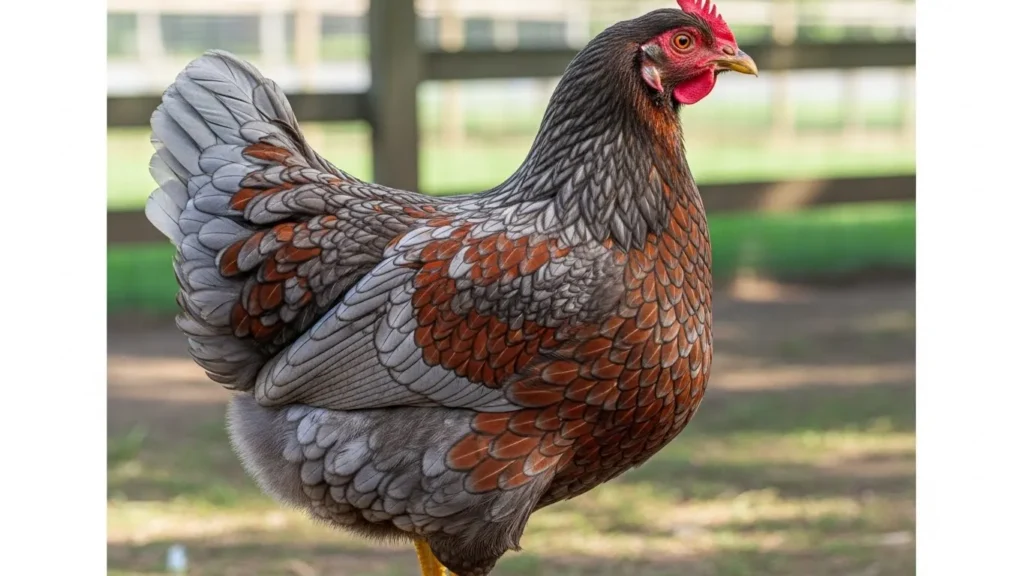
Deep mahogany-red feathers outlined with slate-blue lacing. Every feather looks hand-painted.
That’s a Blue Laced Wyandotte.
Beyond the beauty, they’re reliable layers producing 150-220 brown eggs yearly, cold-hardy enough for harsh winters, and calm enough for families.
I’ve kept Wyandottes for years. They’re the birds everyone photographs but nobody realizes are also practical.
Why Do They Stand Out?
Some common reasons they stand out are:
- Dual-purpose heritage breed: Eggs and meat, not just beauty
- Cold-hardy: Developed in New York for harsh winters, lay through cold when others quit
- Beginner-friendly: Calm, forgiving of mistakes, no special care
- Stunning appearance: Three color phases (blue, black, splash)
- Productive: 3-4 eggs weekly plus decent meat yields
This variety came from England, developed by crossing Silver and Golden Laced Wyandottes.
What You’ll Learn
Complete care from housing through breeding. Space needs, feeding, health, and how blue genetics work.
Actual egg counts, not inflated numbers.
Breeding guidance for sustainable flocks. Blue genetics are tricky—I’ll explain color outcomes.
Suitability assessment. These birds aren’t perfect for everyone. I’ll tell you when they’re right and when they’re not.
By the end, you’ll know exactly how to keep Blue Laced Wyandottes successfully.
Breed Overview & History
Let’s understand where they come from and help you know what to expect from them.
Wyandotte Origins
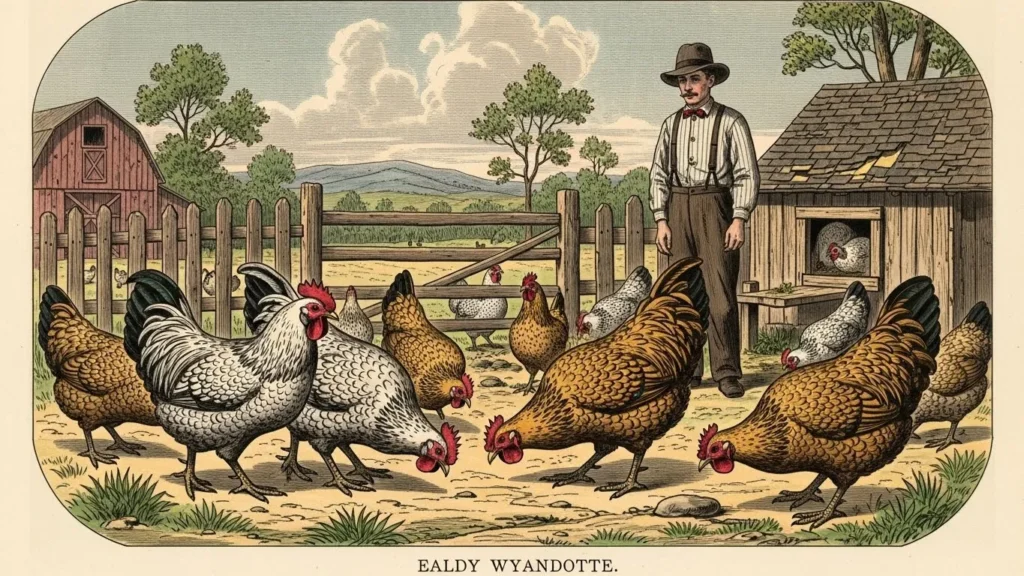
Four people created the Wyandotte breed in the 1870s: H.M. Doubleday and John Ray (New York), L. Whittaker (Michigan), and Fred Houdlette (Massachusetts).
They crossed dark Brahmas with silver spangled Hamburgs. The goal was a dual-purpose bird—eggs and meat—with striking looks.
The result was the Silver Laced Wyandotte, admitted to the American Poultry Association Standard of Perfection in 1883.
According to Wikipedia, the breed was named after the indigenous Wyandot people of North America, not because breeders had direct connection but as an honor.

Blue Laced Red Development
The Blue Laced Red variety came later through crossing Silver and Golden Laced Wyandottes.
In actuality, they were created in the late 1800s, though sources vary on exact timing.
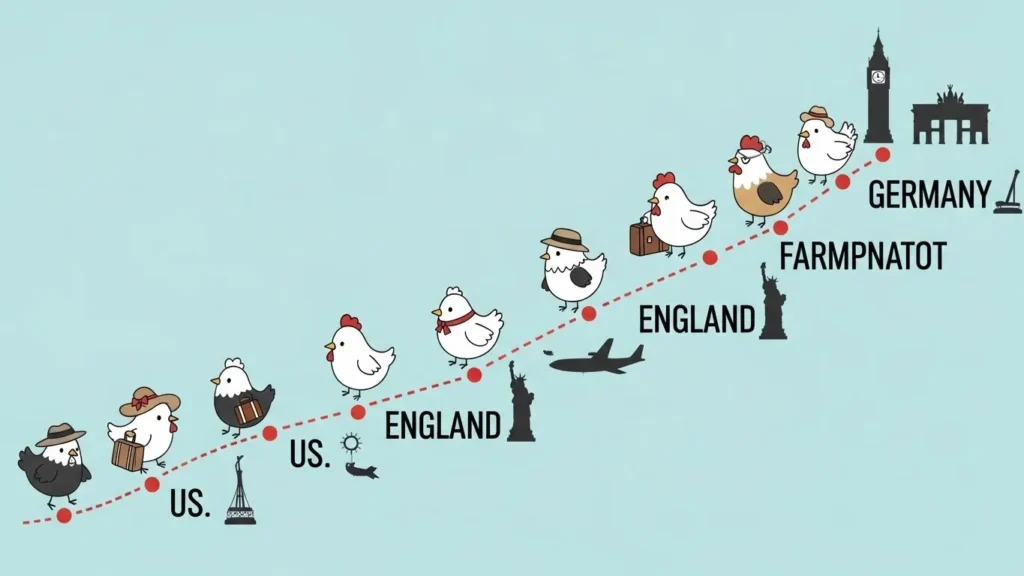
The color was perfected in England, then Germany, before returning to the United States. According to The Frugal Chicken, chickens literally sailed across the pond to England, continued to Germany for perfection, then came back to America by the 1920s.
Murray McMurray Hatchery confirms they received their stock from an outstanding US breeder who developed these from crossing Silver and Golden Laced varieties.
Not Yet APA Recognized
For decades, Blue Laced Red Wyandottes aren’t officially recognized by the American Poultry Association Standard of Perfection.
Breeders are actively working toward recognition. The challenge is the blue gene doesn’t breed true—you get three color phases from breeding.
Cackle Hatchery has been developing their bloodline since 2017. Most available birds are production lines, not show quality.
What Makes Them Heritage
Dual-purpose breeding: Eggs and meat from day one
Stable genetics: Heritage breed that breeds true to type (except color phases)
Long lifespan: 5-8 years average, some reach 10-12
Cold-hardy development: Created for Northern climates
According to Brown’s Family Farmstead, heritage breeds like Blue Laced Wyandottes are known for stable genetic lineage and hardiness.
Why They’re Special Today
- Beauty + function: Stunning looks with 150-220 eggs yearly
- Beginner-suitable: Calm, hardy, forgiving of mistakes
- Cold-weather champions: Rose comb and dense feathering prevent frostbite
- Excellent foragers: Thrive in free-range setups
- Family-friendly: Docile temperament safe around children
Physical Characteristics
Blue Laced Wyandottes are instantly recognizable once you know what to look for.
Size & Weight
Hens: 6-7 pounds
Roosters: 8-9 pounds
Appearance: Look heavier due to thick, fluffy feathering
Stunning Feather Pattern
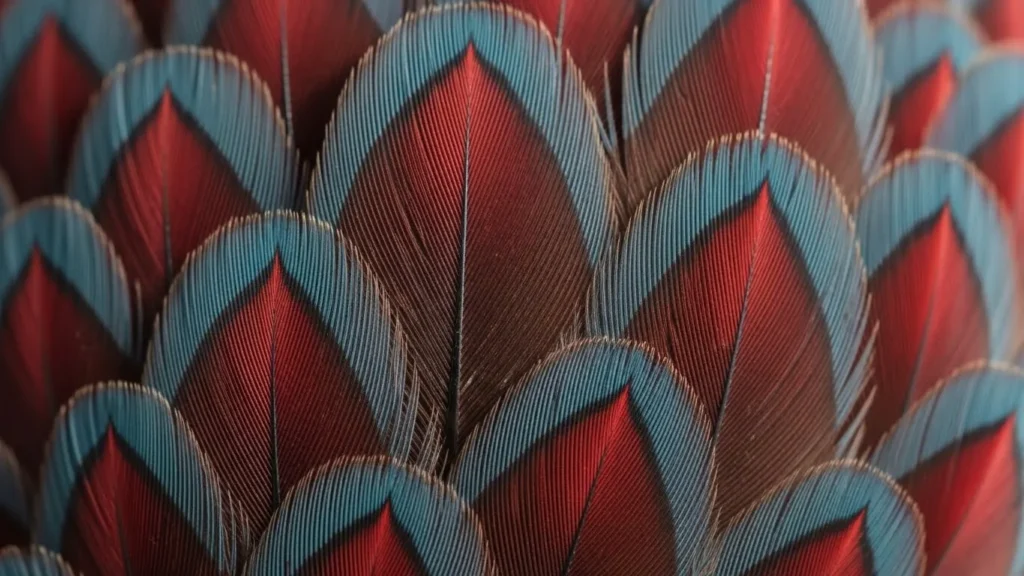
Base color: Deep mahogany red to brick red
Lacing: Slate-blue (gray-blue) outline around each feather edge
Overall effect: Every feather looks individually hand-painted
Three Color Phases
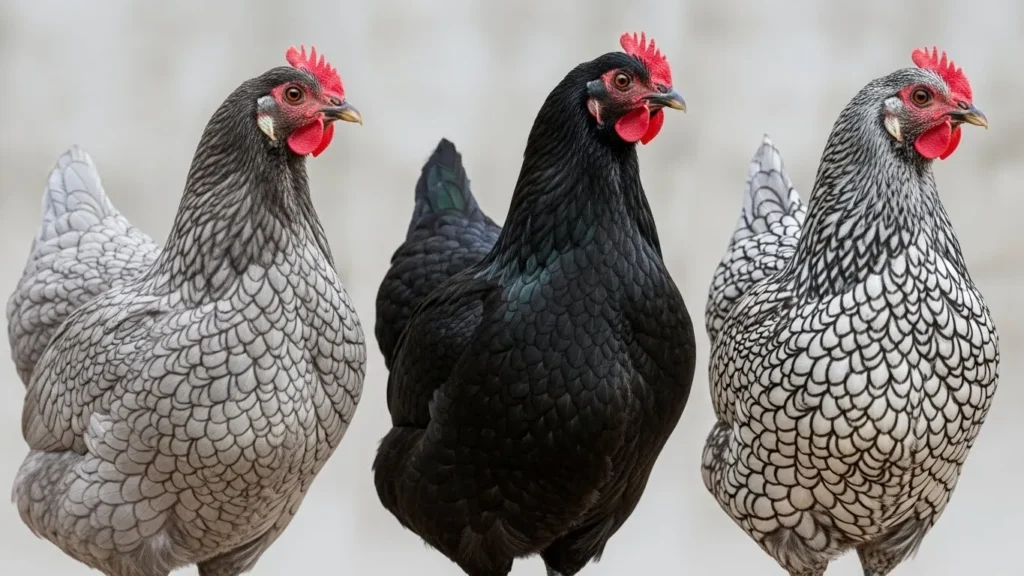
Why three colors? Andalusian blue genetics create variation.
Blue phase (standard): Red base with slate-blue lacing – most common
Black phase: Darker charcoal appearance with minimal blue
Splash phase: Very light blue to nearly white lacing
North Star Poultry explains all three are the same breed—just genetic variation from the blue gene. Blue x Blue breeding produces 25% black, 50% blue, 25% splash.
Body Shape
Classic Wyandotte conformation:
- Broad, deep body with gentle U-shape
- Full, well-rounded breast
- Short, sturdy yellow legs
- Wide, curved back
- Dense, smooth feathering
According to Roobeez, hens have a distinct curvy-round plump shape that makes them look heavier than actual weight.
Head Features
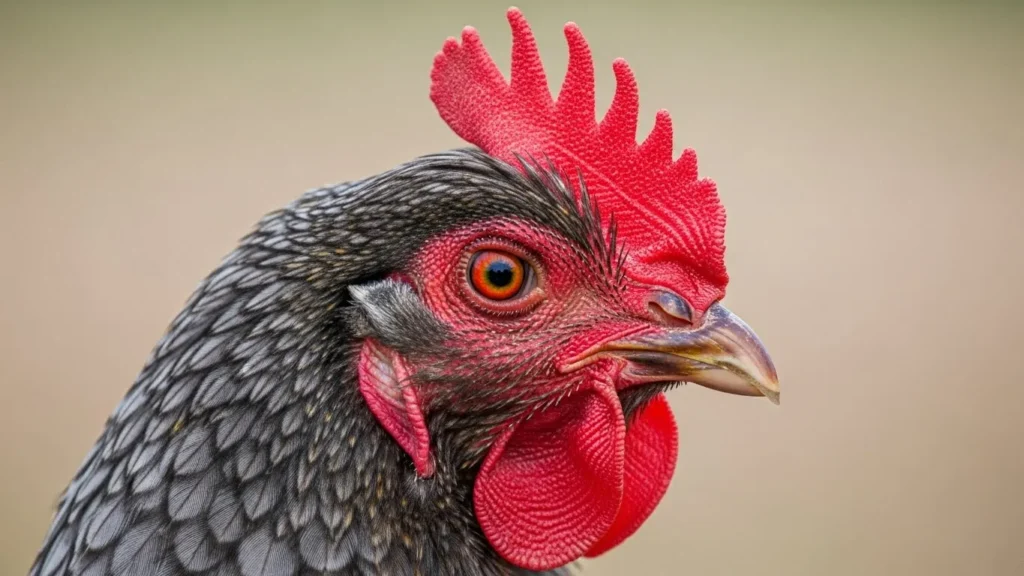
Rose comb: Flat, broad, sits close to head (key for cold tolerance)
Color: Bright red comb, wattles, face, earlobes
Eyes: Deep-set, reddish-bay color
Beak: Horn-colored to yellow
Why rose comb matters: Prevents frostbite better than single combs, makes them ideal for Northern climates.
Roosters vs Hens
Roosters:
- 8-9 pounds
- Pointed, shiny saddle and hackle feathers
- Larger, redder combs and wattles
- Crow at maturity
Hens:
- 6-7 pounds
- Rounded, uniformly colored feathers
- Smaller combs
- Don’t crow (obviously)
North Star Poultry warns to be careful sexing young birds—wait until 5 months for certainty with Wyandottes.
Appearance:
Dense, fluffy feathering: Smooth, soft texture
Balanced build: Well-proportioned, sturdy
Short legs: Yellow, support their weight easily
Impressive presence: Round, full shape creates striking silhouette
Brown’s Family Farmstead describes them as having broad, rounded bodies with well-proportioned, sturdy build typical of dual-purpose breeds.
Temperament & Behavior
Blue Laced Wyandottes have distinct personalities worth understanding.
General Temperament
Calm and docile: Nothing flusters them. Chickens and More (Chris Lesley, 20+ years experience) notes they’re calm, docile, dependable—rarely upset about anything.
Friendly but aloof: Personable without being needy. Think confident, self-assured birds rather than lap chickens.
Talkative: Some are chatty. The Featherbrain notes moderate-high noise level for this breed.
Strong personalities: These are divas. They know they’re gorgeous and act like it.
With Humans
Tolerates handling: Safe around people, especially children. Tractor Supply confirms they tolerate children well, making them great for families.
Not lap chickens: The Happy Chicken Coop notes they’re friendly and gentle but prefer independence—not overly cuddly.
Trainable: Intelligent, respond to positive reinforcement. Tractor Supply reports you can train them to follow simple commands.
Individual variation: Some are friendlier than others.
With Other Chickens
Generally peaceful: Low-to-moderate aggression according to The Featherbrain.
Prefer their own kind: The Happy Chicken Coop notes they mix well but don’t socialize much, preferring company of other Wyandottes.
Not bullies: Don’t pick on weaker birds.
Mid-to-high pecking order: Usually high in hierarchy without excessive aggression.
Foraging Behavior
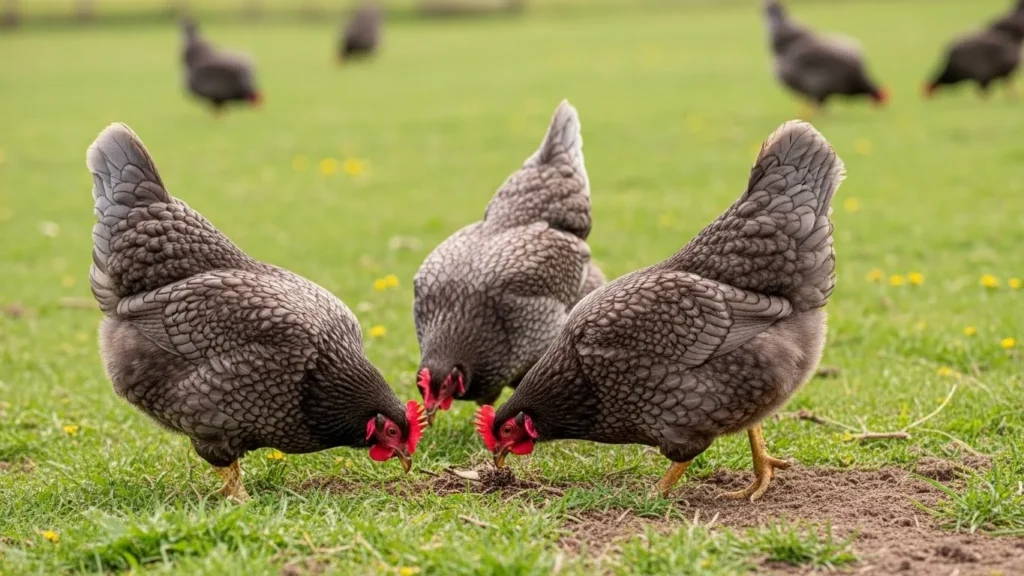
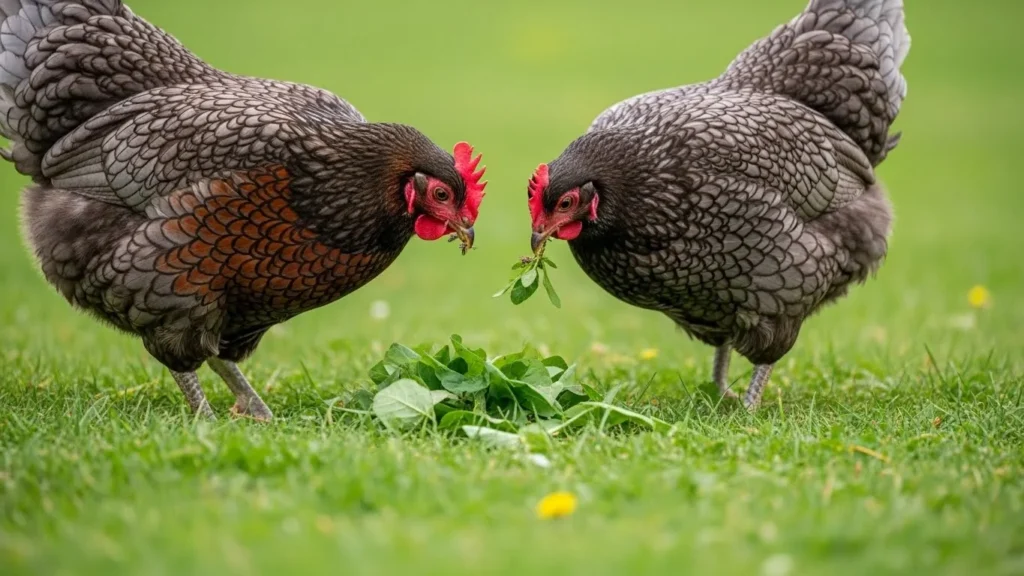
Excellent foragers: Love free-ranging, actively seek bugs and seeds.
Self-sufficient: Chickens and More notes they supplement diet significantly with seeds, bugs, and tasty morsels when allowed to range.
Active explorers: Curious, investigative, always scratching around.
Prefer freedom: Thrive with space though tolerate confinement reasonably well.
Rooster Temperament
Generally calm: Rural Lifestyle News notes Wyandotte roosters can exhibit typical rooster aggression but are usually calmer around people.
Protective without meanness: Guard flocks without excessive human aggression.
Individual variation: Some become aggressive during breeding season. The Featherbrain warns some individuals may be human-aggressive despite breed friendliness.
Broodiness
Moderate tendency: Some go broody, others don’t.
Good mothers: Attentive, protective, will hatch other breeds’ eggs.
Egg Production
Blue Laced Wyandottes are reliable layers. Here’s what to expect.
Production Numbers
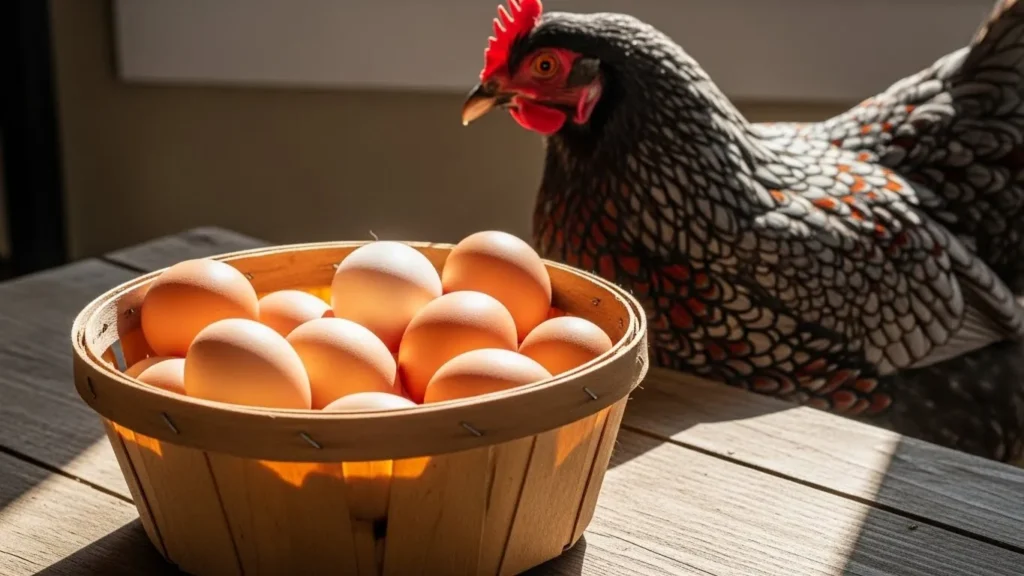
Annual: 150-220 eggs per year depending on line
Weekly: 3-4 eggs during peak production (spring through fall)
Egg size: Medium to large
Egg color: Light brown to cream
Murray McMurray Hatchery estimates 150-220 eggs annually. Mile Four reports 180-240 eggs from quality breeding lines.
According to Tractor Supply, from spring to fall, hens may lay about one egg per day. Production decreases somewhat in winter but remains better than most breeds.
Laying Timeline
Start laying: 18-22 weeks (4-6 months old)
Peak production: Years 1-3
Gradual decline: 10-15% decrease annually after peak
Longevity: Can lay 5-6 years at reduced rates
My Pet Chicken notes they usually start laying around 4-5 months of age.
Broodiness Behaviour:
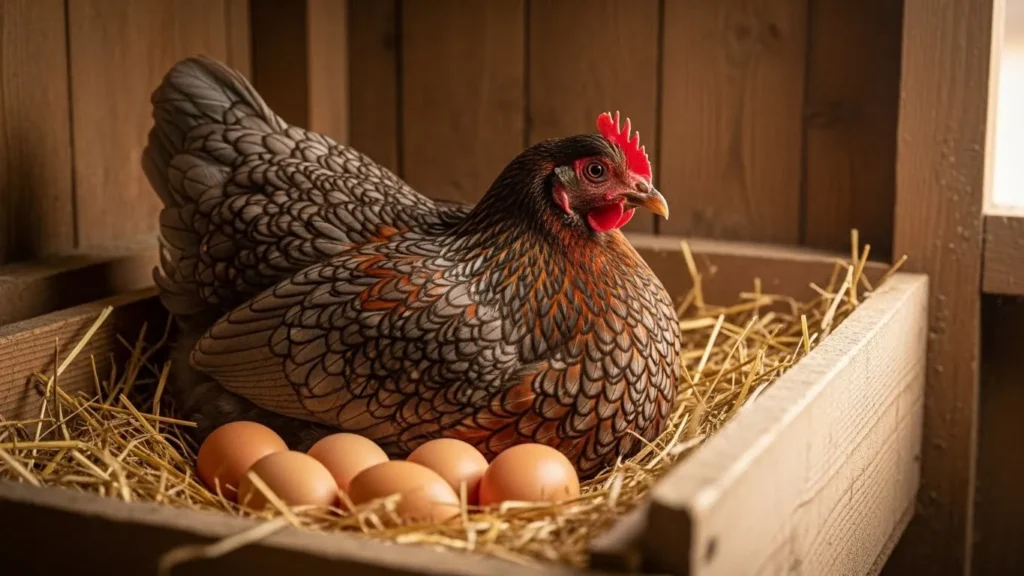
Frequency: Moderate—some go broody, others rarely or never
Maternal behavior: Excellent mothers when broody, attentive and protective
Variability: Depends on individual hen and breeding line
Impact on production: Broody hens stop laying until they finish raising chicks or break broodiness
Production Quality
Shell strength: Good with proper calcium supplementation
Consistency: Steady layers without erratic patterns
Feed requirement: Standard 16-18% protein layer feed
What is the reality?
Not maximum producers: Production hybrids like ISA Browns lay 300+ eggs. Wyandottes won’t match that.
But more sustainable: Heritage genetics mean they maintain moderate production for more years than hybrids.
Value proposition: 150-220 eggs yearly for 5-6 years beats 300 eggs for 2 years if you keep long-term flocks.
According to The Chicken Coop Company, they average 190-220 eggs annually from their production line—practical traits over show quality.
Housing Requirements
Blue Laced Wyandottes need adequate space and proper shelter. Here’s what they require.
Space Requirements
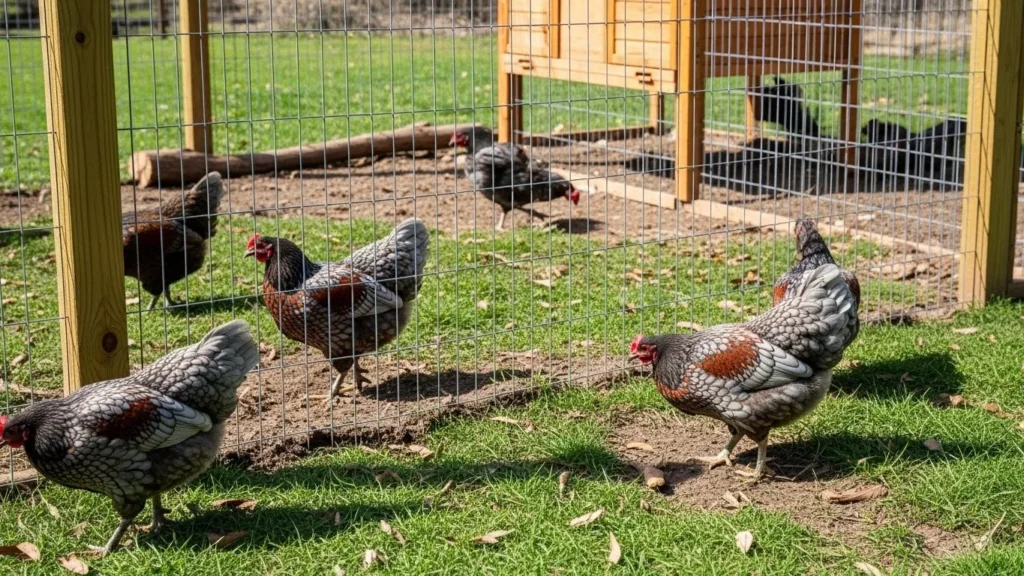
Coop space: 4 sq ft per bird minimum (6 sq ft if with assertive breeds)
Run space: 10 sq ft per bird minimum
Free-range: Thrive with access to larger areas
Many of the keepers say, Wyandottes are quite large and rounded so they need good space—4 sq ft minimum but more is always better. If housed with assertive breeds, provide 6 sq ft each.
Roosting Requirements
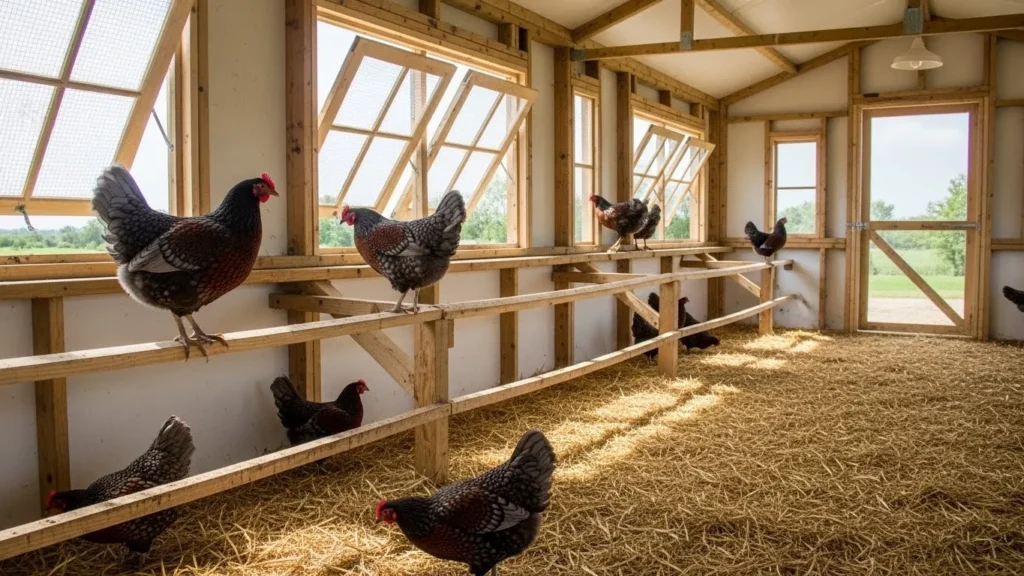
Roost space: 8-10 inches per bird (they’re large).
Roost height: 18-24 inches (low to medium due to heavy body weight)
Roost material: 2×4 lumber, wide side up for stable perch and warm toes
Make roosts substantial—these are heavy birds needing stable support.
Nesting Boxes
Size: 12×12 inches minimum
Quantity: One box per 3-4 hens
Design: They fit snugly in standard boxes, preventing double bunking
Coop Design?
Ventilation: Critical for health—prevents moisture buildup and respiratory issues
Predator protection: Hardware cloth, secure latches, buried wire around perimeter
Dry environment: Keep coop dry to maintain their fluffy feathering and prevent parasites
Easy access: For cleaning, egg collection, health checks
Climate Adaptability
Cold tolerance: Excellent—rose comb resists frostbite, dense feathering insulates
Heat tolerance: Good with shade and ventilation (though they can retain heat due to heavy bodies)
Brown’s Family Farmstead confirms they’re tough and hardy, adapting well to various environments.
Confinement vs Free-Range
Confinement: Handle well, don’t stress in runs
Free-range: Excel as foragers, prefer space
Fencing: 3-foot fence contains them (not good flyers)
Keepers of this breed confirms that Wyandottes are not good flyers, so a 3-foot fence will contain them nicely.
Space-Related Problems
Insufficient space causes:
- Feather picking
- Boredom behaviors
- Aggression
- Stress and reduced production
Always build bigger than minimum requirements. More space prevents behavioral issues.
Feeding & Nutrition
Proper nutrition keeps Blue Laced Wyandottes healthy and productive.
Basic Feed Requirements
Chicks (0-8 weeks): 20-22% protein starter feed
Juveniles (8-20 weeks): 18% grower feed
Laying hens (20+ weeks): 16-18% protein layer feed
According to Chickens and More, a chick starter of no less than 20% protein is recommended, gradually switching to 16% layer feed once they reach the point of laying around 16-20 weeks.
Daily Feed Amount
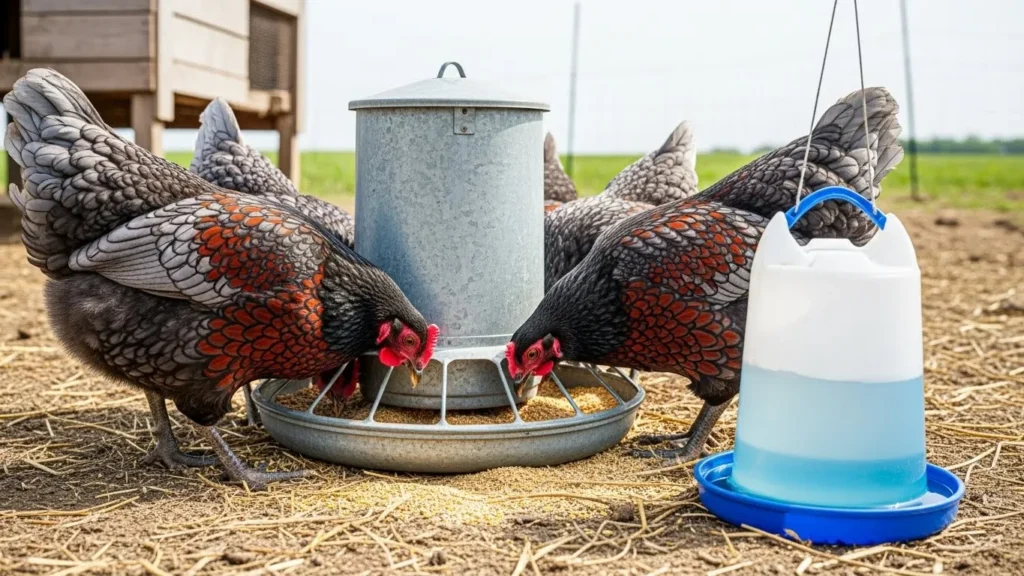
Average consumption: 1/4 to 1/3 pound per adult bird daily
Seasonal variation: They eat slightly more in winter to maintain body heat
Supplementation
Oyster shell: Free-choice calcium for strong eggshells (separate container, not mixed in feed)
Grit: Necessary for digestion, especially if foraging or getting treats
Fresh water: Constantly available, change daily
Foraging Benefits
Excellent foragers: Supplement diet significantly with bugs, seeds, greens when allowed to range
Feed cost savings: Free-range reduces commercial feed costs 30-40%
Nutritional bonus: Natural diet provides better nutrients, darker yolks
I observe after this breed, they happily forage for insects and greens, especially in warm months.
Treats & Supplements
Kitchen scraps: Vegetables, fruits, leafy greens (maximum 10% of total diet)
Protein treats: Mealworms, sunflower seeds for extra nutrition
What to avoid: Avocado, chocolate, raw beans, moldy food, excessive fats
Warning:
Not increase the limit to 10% of the diet to maintain balanced nutrition.
Weight Management
Important consideration: Wyandottes store weight easily due to their rounded frames
Risk: Overfeeding causes obesity, leading to back, heart, and leg problems
Prevention: Don’t overfeed, provide plenty of vegetables, allow free-range exercise
Feed Quality Matters
Check protein content: Match life stage requirements (20% chicks, 16-18% layers)
Avoid cheap feeds: Poor quality leads to health problems and reduced production
I personally recommends high-protein layer feed for optimal egg production.
Health & Common Issues
They are hardy birds with few breed-specific problems.
Hardy breed: Strong heritage genetics, few health issues
Life expectancy: 5-8 years average, some reach 10-12
Common Issues
Standard chicken problems:
- External parasites (mites, lice)
- Internal parasites (worms)
- Respiratory infections
- Bumblefoot
- Egg binding (rare)
Weight-Related Problems
Obesity risk: Rounded frames store weight easily
Health consequences: Joint/leg problems, heart issues, reduced mobility, shorter lifespan
Prevention: Balanced diet, avoid overfeeding, encourage free-range exercise
Cold Weather Health
Rose comb advantage: Less frostbite than single combs
Still monitor: Apply petroleum jelly during extreme cold (-10°F and below)
Keep dry: Moisture plus cold causes frostbite and respiratory issues
Ventilation critical: Prevents ammonia buildup and disease
Preventive Care
Weekly: Observe behavior, check vents, watch for limping
Monthly: Check for parasites, examine feet, assess weight
Quarterly: Worm if needed, deep coop clean
Farmpertise emphasizes prevention routines to catch issues before they become serious.
Illness Signs
Watch for: Lethargy, discharge from eyes/nose/vent, labored breathing, appetite loss, decreased laying, ruffled feathers, limping
Action: Isolate sick birds immediately, consult vet if symptoms persist
Parasite Prevention
Dust baths: Sand or dirt areas for natural control
Coop cleanliness: Regular bedding changes
Diatomaceous earth: Food-grade DE in bedding and dust baths
Monthly checks: Treat with poultry dust if parasites found
Breeding Blue Laced Wyandottes
Understanding the genetics helps you know what to expect from breeding.
Why Breeding Is Complex
Blue doesn’t breed true: Even breeding blue to blue produces three color variations
Andalusian blue gene: Incomplete dominant modifier of black
North Star Poultry explains blue is basically black with a lightening factor—like adding white paint to black.
Understanding the Three Color Phases
Blue phase: One blue gene inherited—slate-blue lacing (most desired)
Black phase: No blue genes inherited—darker charcoal appearance
Splash phase: Two blue genes inherited—very light blue to whitish lacing
Breeding Results
Blue x Blue:
- 25% Black
- 50% Blue
- 25% Splash
Blue x Black:
- 50% Blue
- 50% Black
Blue x Splash:
- 50% Blue
- 50% Splash
Black x Black: 100% Black
Splash x Splash: 100% Splash
Breeder Strategies
Most breeders prefer: Blue to blue or blue to black matings
Why: Maintains darker, richer coloring. Foley’s Water Fowl found blue to blue keeps lacing and undercolor consistent.
Avoid splash x splash: Colors get progressively lighter over generations until appearing nearly white
Use black birds: When blue color becomes too light, breed black laced rooster to blue hens to restore depth
How to Select Quality Breeding Stock?
Prioritize body type first: Correct Wyandotte conformation matters more than perfect color
What to look for:
- Broad, deep U-shaped body
- Rose comb set close to head
- Yellow legs and beak
- Clean, crisp lacing (not muddy or double-laced)
- Deep brick-red base color
Avoid:
- Brassy gold tones (indicates Gold Laced shortcuts)
- Single combs (disqualifies from showing)
- Poor body conformation
- Incorrect lacing patterns
Common Breeding Problems
Brassy coloring: Some hatcheries use Gold Laced crosses, creating unwanted brass tones instead of deep mahogany red
Poor lacing: Can be smudged after molts due to environmental factors like sudden temperature changes
Hackle feather lacing loss: Splash variety especially prone to losing neck lacing.
Not APA Recognized Yet
Over decades of breeding, Blue Laced Red Wyandottes aren’t officially recognized by the American Poultry Association.
Why: The blue gene doesn’t breed true—breeders get three color phases.
Progress: Breeders actively working toward recognition.
Current status: Production lines widely available, show quality harder to find.
Breeding Timeline
Sexual maturity: 5-6 months
Full maturity: 18 months (Wyandottes are slow-maturing)
Breeding season: Spring through summer optimal
Fertility: Good with proper rooster-to-hen ratios (1 rooster per 8-10 hens)
Chick Appearance
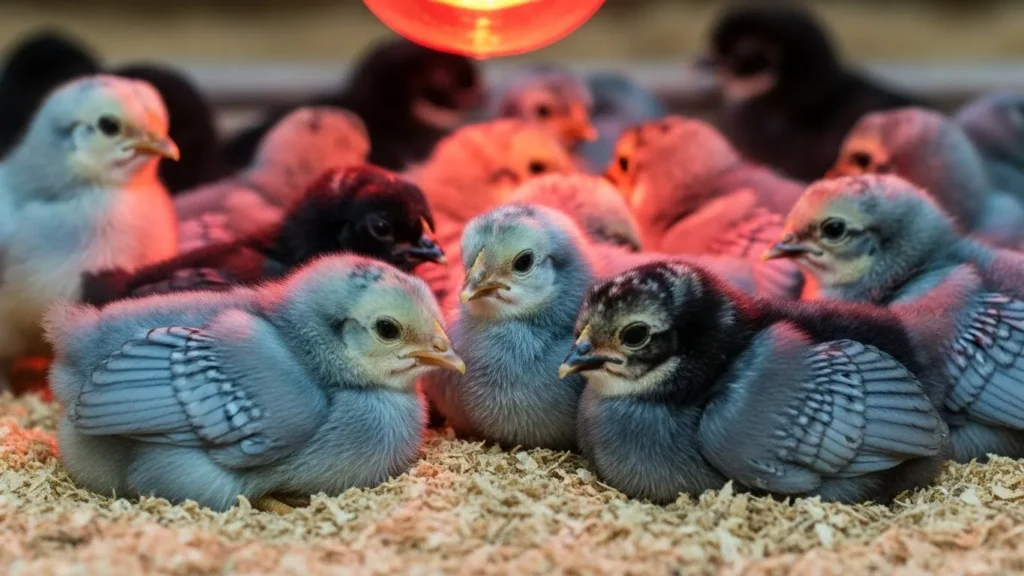
At hatch: Dark blue or light blue coloring—can’t distinguish blue from black phase yet
3-4 weeks: Barring develops, early feathering shows
8-12 weeks: True color phase becomes clear
Raising Chicks
Chicks are hardy but need proper early care.
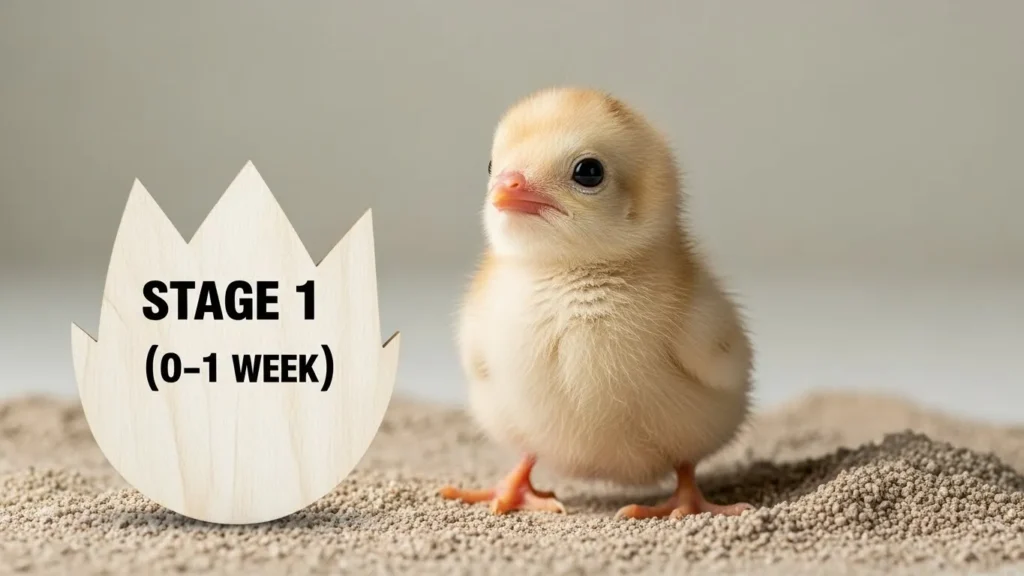
Appearance & Development
At hatch: Dark or light blue coloring
Can’t determine phase yet: True color unclear until 8-12 weeks
Timeline: Wing feathers within first week, full feathering by 8-10 weeks
Brooder Setup
Temperature: 95°F first week, reduce 5°F weekly
Space: 1/2 sq ft per chick, increase to 1 sq ft by week 4
Bedding: Pine shavings (never newspaper—causes leg problems in heavy breeds)
Heat source: Radiant brooder plate safer than heat lamps
Feed Requirements
0-8 weeks: 20-22% protein chick starter
8-20 weeks: 18% protein grower feed
Water: Fresh daily, use chick waterers
Growth Timeline
0-2 weeks: Rapid wing feather development
3-4 weeks: Body feathers, barring pattern visible
6-8 weeks: Mostly feathered, can go outside in warm weather
8-12 weeks: True color phase becomes clear
18-20 weeks: Sexual maturity, hens start laying
Common Problems
Feather picking: Wyandottes prone if confined and bored
Prevention: Adequate space, enrichment, avoid overcrowding
Sexing Difficulty
Rose combs make early sexing hard: Can’t use comb until 4+ months
5 months for certainty: Wait for definitive identification
Rooster signs: Shiny saddle feathers (4 months), pointed hackle feathers, crowing
Comparison to Other Breeds
vs Rhode Island Red: Calmer temperament, prettier appearance, slightly fewer eggs (150-220 vs 250-280)
vs Buff Orpington: More active, better foragers, similar friendliness, comparable production
vs Leghorn: Much calmer, better with kids, fewer eggs but winter-hardy and dual-purpose
vs Silver Laced Wyandotte: Same temperament and care, just different coloring. Blue Laced less common, harder to source.
Ideal Owner Profile
Perfect match:
- Values beauty and production equally
- Lives in cold or moderate climate
- Has adequate space (coop + run or free-range)
- Wants beginner-friendly birds
- Appreciates heritage genetics
- Willing to pay premium for unique appearance
Poor match:
- Needs maximum egg production only
- Wants purely meat birds
- Extreme heat climate with no cooling options
- Very limited budget
- Wants extremely cuddly lap chickens
Real Keeper Experiences
My Pet Chicken customer review: “All arrived alive and well. The Wyandottes are very relaxed with me. Many allow me to hold them without being frightened. They have beautiful markings.”
Cackle Hatchery customer: “They’re gorgeous, healthy birds” though noted some color variation between individuals and slower laying start for one hen.
According to The Chicken Coop Company, they’re producing birds focusing on practical traits over show quality—averaging 190-220 eggs annually from their production line.
Where to Buy
Finding quality Blue Laced Wyandottes requires sourcing from reputable suppliers.
Reputable Hatcheries
Cackle Hatchery: Developing bloodline since 2017, production-focused
Murray McMurray Hatchery: Stock from outstanding US breeder, estimates 150-220 eggs annually
Valley Hatchery: Live arrival guarantee, healthy chicks available
Meyer Hatchery: Offers BBS (Blue/Black/Splash) variety, ships minimum 3 chicks April-November
The Chicken Coop Company: Production line focusing on practical traits, averaging 190-220 eggs annually
What to Look For
Health guarantees: Live arrival guarantees from reputable hatcheries
Breeder reputation: Check reviews on BackYard Chickens forum
Body type focus: Ask if breeding emphasizes conformation or just color
Vaccination options: Marek’s disease vaccination recommended
Important Warnings
Color variation: Blue gene doesn’t breed true—expect light to dark blue lacing variations
Hatchery shortcuts: Some use Gold Laced crosses creating brassy tones instead of deep mahogany red
Body type sacrifice: BackYard Chickens warns many hatcheries sacrifice body type for quick color production
Production vs show: Most available birds are production lines, not show quality
Bantam Option
Dunlap Hatchery: Offers Blue Laced Red Wyandotte Bantams
Size: Hens 36 oz, roosters 40 oz
Same characteristics: Docile, broody, climate adaptive in smaller package.