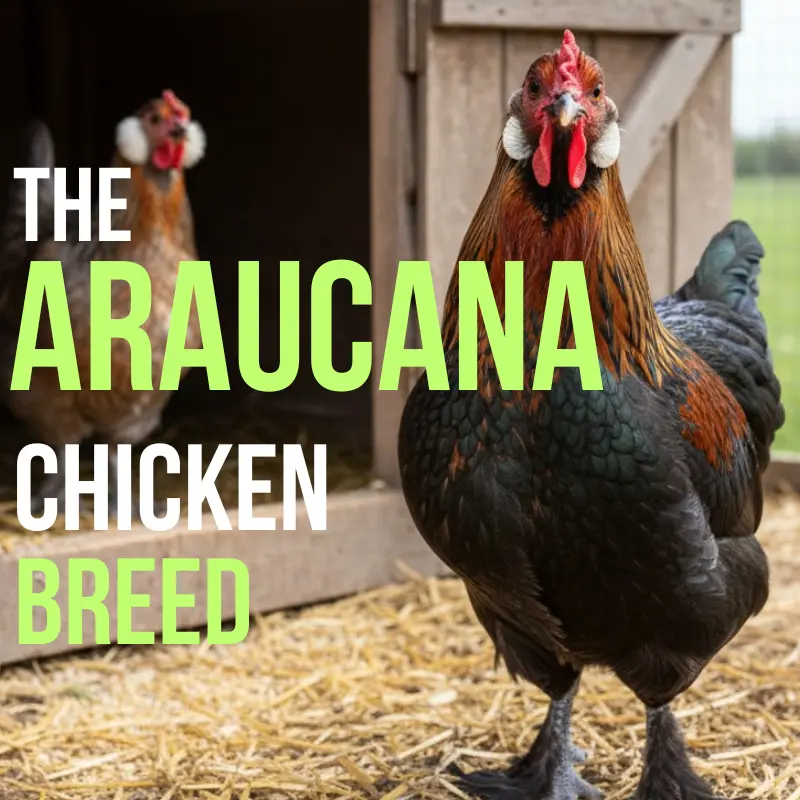
What are Araucana Chicken?
How to pronounce
Yeah! Simple ‘arrow-caa-na’. Some people call them ‘ a-roo-car-na’.
Araucana: The Rebel Chick with the Blue Eggs
Oh man, you see somewhere chicken that looks like it just rolled out of a comic book? That’s the Araucana for you!
We’re going to deep dive into this genuinely interesting and, dare I say, slightly troubled designer chicken.
It’s not just about the blue eggs, it’s about the whole package of quirky looks and a wild historical origin story.
Which Chicken Breeds Lay Blue Eggs?
Of course. The passion for blue eggs is real!
Here are the top layers:
- Ameraucana: Around 200–280 eggs/year.
- Cream Legbar: Excellent, laying 180–260 eggs/year.
- Araucana: The rare rumpless original, laying 150–200 eggs/year.
- Easter Egger: Hybrid chickens with varied, but high, production (200–280+ eggs/year).
These breeds provide beautiful egg shades from light sky blue to turquoise.
What’s the Lowdown on the Araucana’s Look?
With time I experienced that the Araucana is one distinctive-looking chicken.
I mean this in the nicest way possible, but their overall appearance and physical features often remind me of a vertical guineapig! Their body structure is just… different.
Yeah! Some folks, you will see them, even say they look like a mini-dinosaur, maybe a tiny Dilophosaurus if you squint, it’s completely possible.
Their backs have these strange concave spines that make them look like they are permanently doing a weird little yoga pose.
Oh, and get this: they have no tails. It’s a key part of their unique characteristics for breed identification.
Sometimes pictures speak louder than words, but their facial hair is really what seals the deal. We’re talking about those crazy ear tufts!
They give the bird a madcap look, like the villain Doctor Robotnik from the game Sonic suddenly got turned into a chicken. Seriously, this is a chick with an attitude!
From South America to Your Coop: The Araucana Backstory
Ah, the history! This is where the true expertise comes in. The original Araucana was developed in the Araucanía region of Chile, giving the breed its name.
There’s still a bit of a debate about whether this was a true human-interaction situation by the people there, or if the two chicken breeds just bred naturally.
Either way, it’s a story steeped in South American culture.
The development of the breed started by crossing the only two chicken breeds kept by the Mapuche Indians: the Collonco and the Quintero.
The Collonco was the one that literally brought the famous blue eggs and the rumpless trait to the party.
And here’s the tragedy: the Quetros chicken is the one responsible for the deadly tuft gene. Dr. Reuben Bustos was the first to breed them commercially and decided to home in on these odd traits—the rumplessness and the tufts—not realizing the harm they might actually cause to the chicks.
It’s a classic egg-sample of unintended consequences in breed recognition and introduction to other countries.
Colors & Varieties
What Are the Recognized Varieties of Araucana Chickens?
The American Poultry Association (APA) recognized 5 variants of this breed, they are:
- Black
- Black Breasted Red
- Golden Duckwing
- Silver Duckwing
- White
There are other many color varieties, they have ability to show the face to world, but unfortunately, not step in front.
The Araucana Chicken Breed Standard
Seriously, to be a true Araucana, you need to meet the strict breed standard.
They must proudly sport those tiny red pea combs that snuggle right flat to the chicken’s head, and be rumpless—meaning no tail!
The must-have features are the infamous ear tufts and the promise to lay only blue eggs.
Don’t forget, these chickens should be clean-legged, and depending on their color variety, their shanks should be willow, yellow, or black.
Yeah! A proper Araucana always shows upright posture—a true little designer diva!
Araucana Chicken Size & Physical Characteristics
How Big Are Araucana Chickens?
Ah! They are medium-sized birds, not behemoths.
A rooster usually hits about 6-7 lbs, making them manageable.
The hen is slightly smaller, coming in near the 6 lbs mark. Seriously, they’re just right for a backyard.
If you analyze it once, you will notice that their size is slightly bigger than Silkies and they are smaller than Jersey Giants.
Can You Get Bantam Araucana Chickens?
Yeah! For those who prefer pint-sized poultry, you absolutely can get Bantam Araucana chickens.
These little guys are hilarious with their upright waddle. Bantam roosters weigh around 26 ounces, and the Bantam hens are 24 ounces. Wow, they are tiny!
The Feathered Headgear: What is the Deal with Araucana Tufts?
You can instantly notice two unique physical traits: they don’t have tails, and they rock those crazy ear tufts. T
These famous plumes, sometimes called peduncles, truly make the chicken look like a superhero or a bizarre fashion model, giving it a quirky unique look.
Wow! These tufts sprout out in all shapes and sizes. I’ve personally seen them grow from weird folds of skin below ear level, which are technically called plicae.
It’s almost like a mole or a skin tag with feathers, and honestly, this feature exists because of the infamous dodgy gene.
Seriously? That dodgy gene is why you rarely see them listed as common stock in most hatcheries, cementing their status as rare chicken breeds.
This is the core of the genetic factors behind tufts, and it brings up significant health concerns related to tufted gene viability.
The tufts were intentionally bred into the bird because Dr. Reuben Bustos just liked them! He spotted this face fluff in their predecessors and wanted to make a feature of his new blue-egg-bonanza bird.
Ah! the problem! The tufts don’t always grow where they are supposed to. They were intended to grow symmetrically and be pointing backward. But, yeah, that didn’t always go to plan.
You can get tufts on both sides, or sometimes they are totally non-symmetrical, or only on one side and not the other, sometimes even three tufts popping off the face!
If you are obsessed with symmetry, you might dig a different chick!
The tufts come in kinds of cool and awkward-looking styles—from teardrops and powder puffs to fans and balls. They’re a total mess, but a charming mess.
What Does Rumpless Mean?
Ah, the rumpless thing! they are famously rumpless, meaning they are completely missing their tails.
Obviously, they aren’t just about missing feathers. They lack the coccyx and the last couple of vertebrae in their spines.
The explanation of the rumpless trait (no tail/tailbone) is pretty intense.The trait was bred purposefully from Collonca chickens.
The old colonials believed these birds had a better shot at escaping predators because there was nothing to grab! A clever defense, right?
This is how it affects appearance and mobility: that upright stance and the back that slopes toward its bottom is a super recognizable look.
Here’s the kicker for breeding considerations for rumpless chickens: missing the uropygial gland at the base of their backs, which is crucial for preening.
Keep an eye on those feathers! You can find specialized poultry supplies online to help.
Araucan Chicken Eggs:
What color eggs do Araucana chickens lay?
Oh boy! It’s all about those gorgeous blue and blue-green egg colors — they’re famous for a reason.
The genetic basis of blue egg production is pretty cool — a single dominant gene causes the pigment to go right through the shell. That’s what makes these eggs unique.
But wait a minute — do Araucanas lay pink eggs? (That’s a total myth-versus-reality issue, folks.)
The answer is a hard no for a true Araucana; they only lay the beautiful blue shades. If you get pink, you’ve got a crossbreed!
Are Araucana Chickens Good Layers?
Ah, yes! Despite their quirky looks, these girls are quite decent. You can expect a respectable annual egg production rate of around 150 to 200 blue eggs!
Their egg size and consistency are generally medium to large, which is a total win!
But hold on — their laying patterns throughout the year can be a bit seasonal. They’ll slow right down when it gets colder. Oh well!
Do Blue Chicken Eggs Taste Better?
Nope! Let’s squash this myth right now.
No matter the hype, there’s no actual difference in taste compared to brown or white eggs. They look cool, but the flavor is the same, folks.
The nutritional content is also identical — same cholesterol, same protein, same goodness. Forget that old marketing!
This all ties back to consumer preferences and myths. People just go wild for the unusual color, which let hatcheries charge more back in the day. Ah, capitalism!
Are Blue Chicken Eggs Low in Cholesterol?
Back in the day, hatcheries told everyone these eggs were healthier so they could charge a few more pennies. Nope!
This is a total myth. The nutritional facts about blue eggs confirm they taste the same as any other egg — period.
The cholesterol content is exactly the same, and there are no special health benefits.
People eventually caught on to the marketing trick!
Are Araucana Chickens Used for Meat?
Yeah, they’re classed as a dual-purpose bird, but let’s be real — their meat quality and yield are on the smaller side, given their modest size!
Their growth rate for meat production is simply too slow to make them worthwhile as a primary flock for meat.
Oh, you can use them — often retired hens or extra roosters — but when it comes to a good dinner, they pale in comparison to dedicated meat breeds. Trust me!
What Are Araucana Chickens Good For?
Ah! They’re famous for their dual-purpose capabilities (eggs and meat) — though, as we’ve already established, they really shine when it comes to laying.
They’re decent producers of those blue beauties!
Their unique appearance — with tufts and no tails — also makes them excellent for ornamental and show purposes. People love a weird chick!
And for backyard flocks? They’re friendly, hardy, and fun to watch. Araucanas make truly great pets.
Araucana Chicken Temperament & Behavior
Are Araucana Chickens Suitable for Beginners?
That’s my favourite question!
If you can find a chick that hatches, Yes they are surprisingly docile. Their temperament and personality are usually both comical and calm.
They’re fairly easy to handle and care for once they’re past the tricky chick stage. These are hardy birds that don’t ask for much.
“Most breeds get hatch rates of 90%; Araucana breeders get successful hatches of anywhere from 55% to 25%, including the post-hatch period.” (Araucana Club of America)
But wait! You’ll be the first-time chicken keepers, it’s worth knowing that true Araucanas are rare and can be hard to breed. So, just enjoy the one you get!
“Due to their poor hatch rate and the difficulty of breeding them to standard conformation, the Araucana breed is extremely rare. Cackle Hatchery® offered Araucanas from 2012-2016 but discontinued them after 4 years. We knew our customers would never be satisfied with this breed. If you want a chicken that lays eggs with blue shells, consider the Ameraucana” (Cackle Hatchery)
Do Araucana Hens Go Broody?
Ah, bless them all — they do! Their broodiness, frequency and behavior are generally quite high, and they make decent mamas.
But here’s the kicker: when it comes to natural hatching, the odds are stacked against them. That lethal gene means few chicks survive incubation.
So, if you’ve got a true Araucana, you’ll likely be managing broody hens who won’t hatch much. It’s a bit of a tragedy!
How Long Do Araucana Chickens Live For?
Well, you’ll have them around for a good while! With proper care, Araucana chickens generally live for 6–8 years. That’s a decent run for a bird with so much personality.
Do Araucana Chickens Have Health Issues?
May you see some issues, let’s discuss what they are.
As this breed is a rare breed known for their blue eggs and unique physical traits, which unfortunately may lead to specific health challenges.
These issues are primarily genetic and are associated with two key features: ear tufts and rumplessness (lacking a tail).
Here the most common disease with this breed:
- Embryonic Mortality (due to the lethal Ear Tuft gene)
- Reduced Hatch Rate (a direct result of the lethal gene)
- High Post-Hatch Mortality (in chicks with the Ear Tuft gene)
- Ear Infections (associated with the feather tufts/peduncles)
- Conductive Deafness (linked to abnormal middle ear development from the Ear Tuft gene)
- Fertility Issues/Reduced Mating Success (due to Rumplessness – lack of a tail/caudal vertebrae)
- Poor Feather Waterproofing (due to absence of the uropygial/oil gland from rumplessness)
- Pasting of Vent (in rumpless chicks, leading to possible cloacal blockage).
Are they Hardy?
Ok! They will maintain them in any type of environment. They will survive easily in winter as well as their heat tolerance meets the criteria of high profile.
How to Care for the Araucana?
Absolutely, caring for particularly this breed is relatively low maintenance—once they’ve made through the tough chick days.
That harrowing period when they suffer from high post-hatch mortality means you need cautious monitoring, but after that fragile stage, their adult lives are surprisingly simple.
Here’s the thing to take home: these birds forage well, so a quality supplementary feed is often enough.
Since they lack preen glands, they are dependent on their beak alone to groom. I just keep a close eye on their feathers for signs of pests or mites.
By leaving those breeding complications you already know, they don’t have severe general health issues other than those directly tied to their genetics.
Provide ample room to peck, and you’ll find this hardy breed is a joyful addition.
How to Raise Araucana Chicks? (Baby Araucana’s)
Common challenges with raising Araucana chicks are intense post-hatch mortality and pasty vent.
Brooding requirements demand meticulous heat and dryness, ensuring the growth milestones are met.
What are the Feeding & Nutrition Requirements?
Obviously, you want a lot of eggs, a balanced, high-energy diet is crucial.
Use quality layer feed for daily needs, but remember, making eggs is a high-energy process!
I always supplement with occasional treats like mealworms and greens to boost nutrients. Don’t forget clean, fresh water—it’s non-negotiable!
Araucana vs. Easter Egger: The Truth
Seriously, stop calling them the same thing!
The real Araucanas boast ancient heritage as a defined breed, marked by that signature rumpless look and feather tufts. They are the pure blue-egg layer.
Meanwhile, Easter Egger chickens are hybrid chickens—essentially a beautiful genetic mix!
They look more “normal” (they have tails!) and are generally less troubled because they skip the Araucana’s specific genetic drama. The confusion exists only because both lay stunning colored eggs.
Araucana vs. Ameraucana: The Real Distinction
This is the big one, and it comes down to a few key breed standard differences.
The Araucana is the original rebel: always rumpless (no tail!) and featuring those controversial ear tufts (or peduncles). That tuft gene is an evil little problem, causing the devastating high mortality that makes them so tricky.
The Ameraucana is the safer, friendlier cousin. They always have tails, sport fluffy beards and muffs (no tufts!), and they breed true, meaning they don’t carry the dangerous gene. Both lay blue eggs, but the Ameraucana avoids the genetic drama.